
Water Line Repair & Replacement in California
Low water pressure everywhere? Discolored water? A soggy spot in the yard that never dries? Your main water line — the pipe from the street meter to your house — may be failing. We diagnose it, and repair or replace it with minimal digging.
Get Your Free Quote
60 seconds · No obligation · Upfront pricing
It’s Not Your Fixtures — It’s the Line Feeding Them
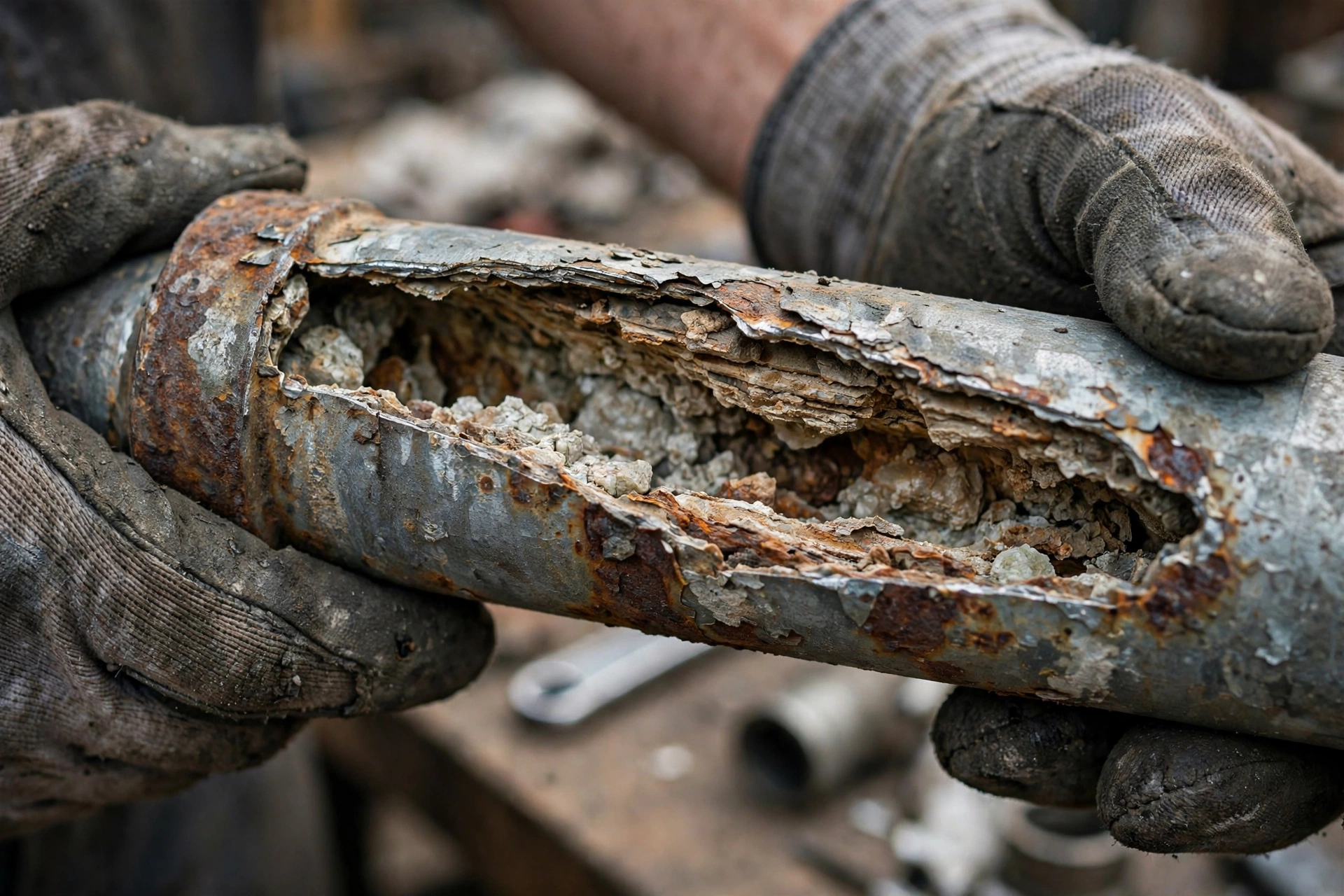
Here’s a pattern we see constantly: a homeowner replaces a showerhead, then a faucet aerator, then calls about “low pressure” — and the real problem is a 50-year-old galvanized water line that’s corroded down to the diameter of a straw on the inside.
Your main water line is the single pipe carrying all water from the city meter to your house. When it fails, everything is affected — every faucet, every shower, every toilet fill. The telltale signs:
- Low pressure at every fixture — not just one (one fixture = fixture problem; all fixtures = line problem)
- Rusty or discolored water, especially first thing in the morning
- Unexplained wet spots in the yard, driveway, or near the foundation
- The water meter spinning with everything turned off (shut off your house valve — if the meter still moves, the leak is in the line between meter and house)
- A sudden spike in your water bill with no change in usage
- The sound of running water when nothing is on
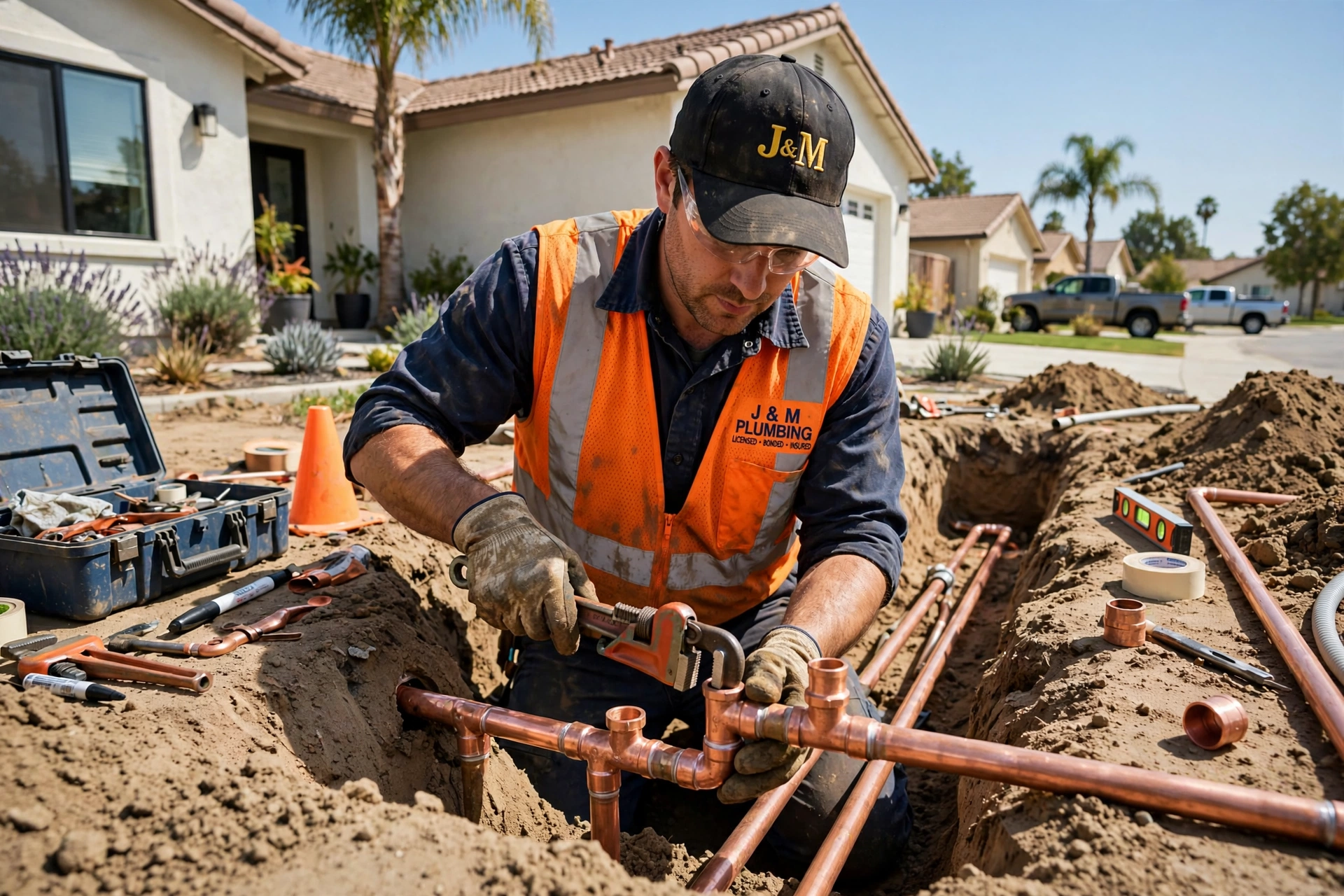
Why California Water Lines Fail
Most residential water lines in California are one of three materials, and each fails in its own way:
Know Your Pipe
- Galvanized steel (pre-1970s homes). The most common failure we replace. Zinc coating wears off, steel rusts from the inside out. Flow restriction is gradual — pressure gets worse year after year — until pinhole leaks start. Typical lifespan: 40–60 years, and most are past it.
- Copper (1970s–2000s). Excellent pipe, but California’s aggressive water chemistry causes pinhole leaks in some areas — especially with acidic or high-chloramine municipal water. Slab-adjacent copper and buried copper without sleeving corrode faster.
- Polybutylene (1978–1995). The infamous “poly” pipe — class-action-lawsuit material. Deteriorates from the inside when exposed to chlorinated water. If your home has gray plastic water lines, replacement isn’t optional, it’s a matter of when.
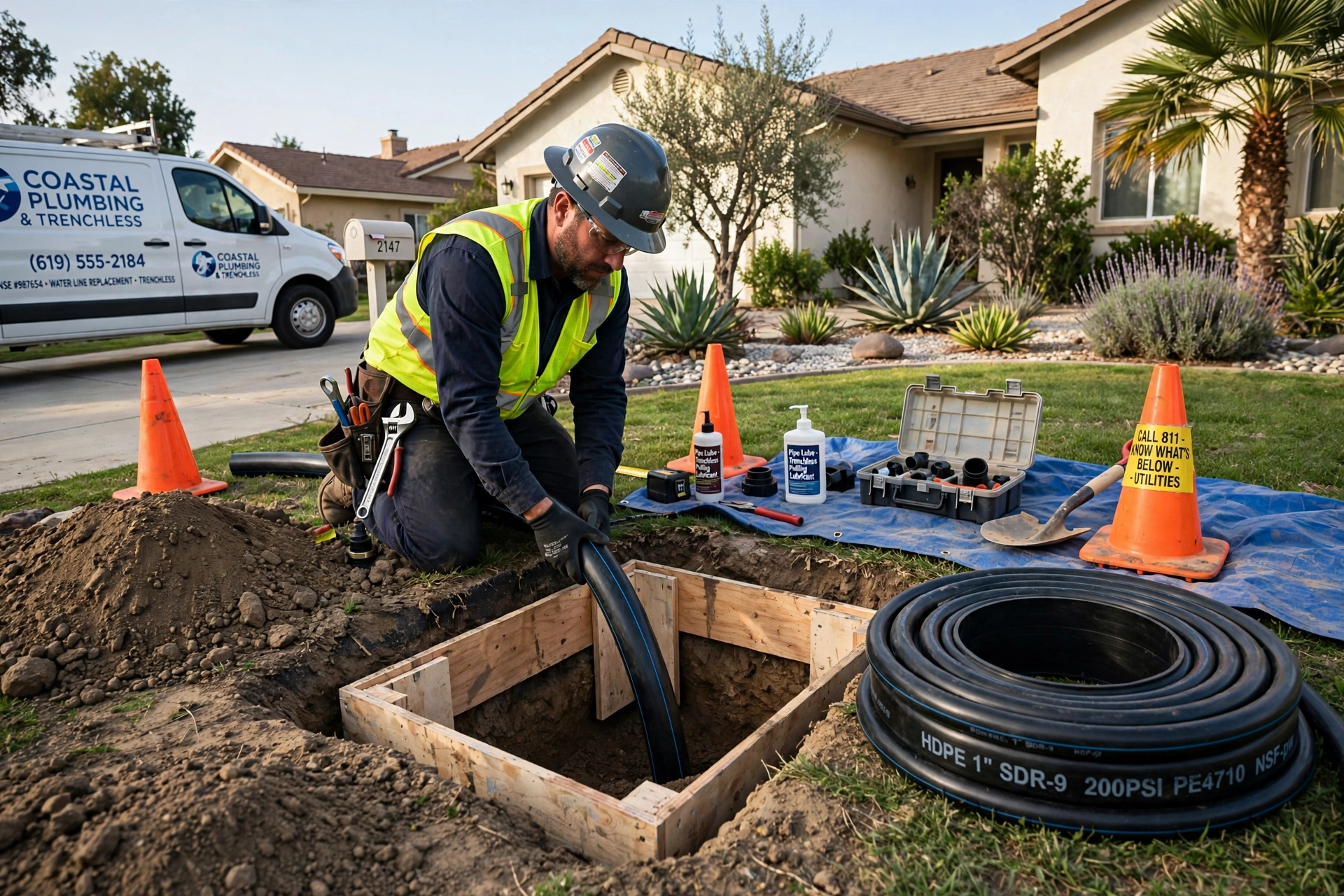
- PEX and polyethylene (modern). What we install today. Flexible, freeze-resistant, corrosion-proof. A properly installed PEX or HDPE water line should outlast the house.
Trenchless vs. Traditional: How We Replace Your Line
The old way: dig a trench from the meter to your house, tearing up the driveway, landscaping, and anything in between. Then put it all back — badly. The new way, when conditions allow:
- Pipe bursting (trenchless). We dig two small pits — one at the meter, one at the house — then pull a bursting head through the old line, fracturing it outward while towing the new HDPE pipe right behind it. Your driveway stays intact. Most residential jobs finish in a day.
- Directional boring. For longer runs or tricky obstacles, we bore a new path underground with minimal surface disruption.
- Traditional trench. Still the right call when the line has multiple branches, the soil is full of unknown utilities, or the run is short enough that trenching is simply cheaper. We trench neatly and restore the surface properly.
We’ll recommend the method that makes sense for your property — not the one with the highest margin. Sometimes that’s trenchless; sometimes a clean 40-foot trench is faster and cheaper. The camera and locator work we do during diagnosis tells us which.
Water Line Costs — Honest Numbers
A full residential water line replacement in California typically runs $3,500–$8,000 depending on length, depth, material, surface restoration (driveway vs. lawn makes a big difference), and whether trenchless methods apply. Spot repairs on an accessible section run $800–$2,500.
Here’s the honest math on repair vs. replace: if your galvanized line has sprung its second leak, stop repairing it. Each spot repair is $1,000+ and the next leak is already forming. Two repairs in, you’ve paid for a third of a new line that would last 50+ years. We’ll tell you straight which side of that line you’re on.
The Meter Test: Confirm It’s the Line (2 Minutes)
Turn off every water-using fixture and appliance in the house. Go to your water meter (usually at the curb in a concrete box). If the dial or digital readout is moving, water is flowing somewhere. Now shut off your house’s main valve. Check the meter again — if it’s still moving, the leak is in the water line between the meter and your house. If it stopped, the leak is inside the house. That two-minute test tells us where to start, and you can do it before we arrive.
The DIY Reality Check
Water line work is not DIY territory. It requires permits in every California jurisdiction, the trench must meet depth and bedding codes, the connection at the meter belongs to the water district’s rules, and a failed joint underground means digging it all up again. We’ve been called to fix homeowner water lines more than once — the re-do always costs more than doing it right the first time. What you can do: the meter test above, and keep the area around your meter box clear so we can work efficiently.
Permits, Inspections, and Doing It Right
Every water line replacement we do is permitted and inspected. That protects you two ways: the work meets code (proper depth — typically 12–18 inches minimum cover in California — proper bedding, correct materials, pressure test before backfill), and you have a paper trail for insurance and resale. Unpermitted water line work is a disclosure nightmare when you sell. We handle the permit paperwork; you don’t lift a finger.
Water Line FAQs
How do I know if my water line needs replacement vs. repair?
One leak on a younger line: repair it. Two or more leaks, galvanized pipe over 40 years old, or system-wide low pressure: replace it. We’ll show you the pipe’s condition and give you an honest recommendation — not a sales pitch.
How long does a water line replacement take?
Most residential replacements finish in 1–2 days. Trenchless jobs are often done in a single day. You’ll have water back the same day in nearly all cases.
Will you tear up my driveway and landscaping?
We avoid it whenever possible with trenchless methods. When trenching is necessary, we cut cleanly and restore surfaces properly — concrete, pavers, and landscaping put back the way we found them.
What pipe material do you install?
Type L copper or HDPE/PEX depending on the application and local code. Both carry 25-year+ warranties from us. We don’t install anything we wouldn’t put in our own homes.
How much does water line replacement cost?
$3,500–$8,000 for most California homes depending on length, depth, and surface restoration. Spot repairs run $800–$2,500. You get a flat upfront price before we start.
Do I need a permit for water line replacement?
Yes, in every California city and county. We pull the permit and schedule the inspection — it’s included in our price.
My water bill spiked — is it the water line?
Do the meter test: everything off, check the meter, then shut your house valve and check again. Still moving = line leak between meter and house. Call us and we’ll pinpoint it.
Low Pressure? Wet Yard? Let’s Fix Your Water Line.
Diagnosis, honest repair-vs.-replace advice, and trenchless options — with upfront flat-rate pricing anywhere in California.
Licensed C-36 • Trenchless Certified • Upfront Pricing