
Sump Pump Installation in California
Water in your basement or crawlspace? One heavy rain can turn a dry lower level into a wading pool. We install reliable sump pump systems — including battery backups that keep working when the power goes out — so the next storm is just weather, not a disaster.
Get Your Free Quote
60 seconds · No obligation · Upfront pricing
Why California Homes Need Sump Pumps
“But it barely rains here.” I hear this a lot. Here’s the thing: California doesn’t get gentle rain — it gets atmospheric rivers. When it rains, it pours. A single winter storm can dump inches in hours, and if your home sits in a low spot, has a high water table, or gets runoff from a hillside, that water finds its way in.
The homes most at risk: houses at the bottom of slopes, properties with poor grading, homes with basements or finished lower levels, and anywhere the water table rises in wet years. I’ve seen $50,000 in damage from a single storm in homes that “never had a problem before.” Climate patterns are shifting — the storms are more intense, and “never flooded” isn’t the guarantee it used to be.
A sump pump sits in a pit at the lowest point of your basement or crawlspace. When water collects, the float switch triggers the pump, which pushes water out through a discharge pipe — away from your foundation. Simple, automatic, and it works while you sleep.
The Power Outage Problem (And the Fix)
Here’s what most people don’t think about: the worst flooding happens during the worst storms, and the worst storms knock out power. A sump pump without power is just a decoration.
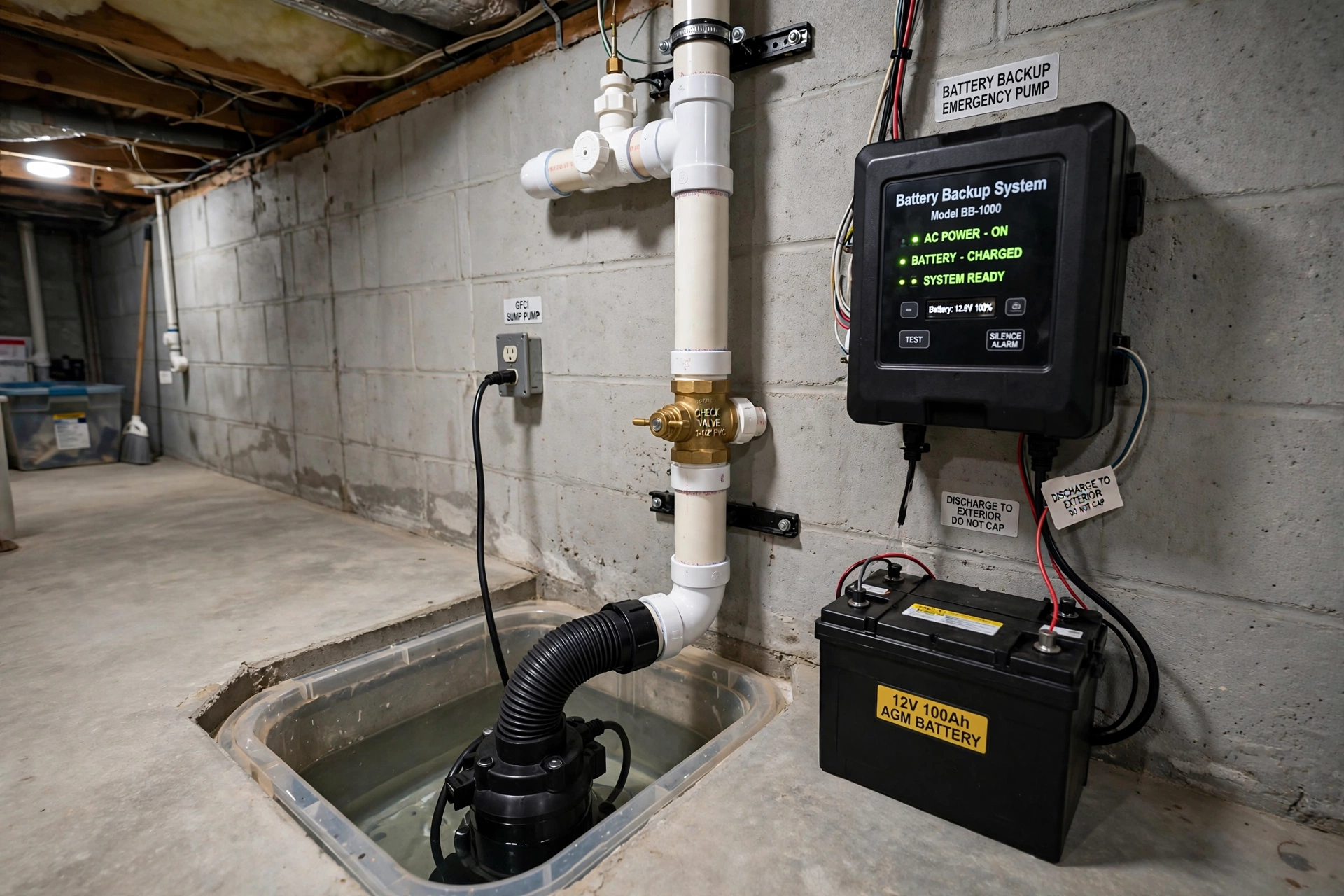
That’s why we strongly recommend battery backup systems. A backup pump with a deep-cycle marine battery kicks in automatically when the power fails or the primary pump can’t keep up. Good backups run for 8-12 hours of continuous pumping — enough to ride out most outages. For maximum protection, we can also install water-powered backup pumps that run off your municipal water pressure with no electricity at all.
If you’re installing a sump pump, install the backup at the same time. Doing it later costs more in labor. I’ve never had a customer regret the backup — but I’ve met plenty who regretted skipping it.
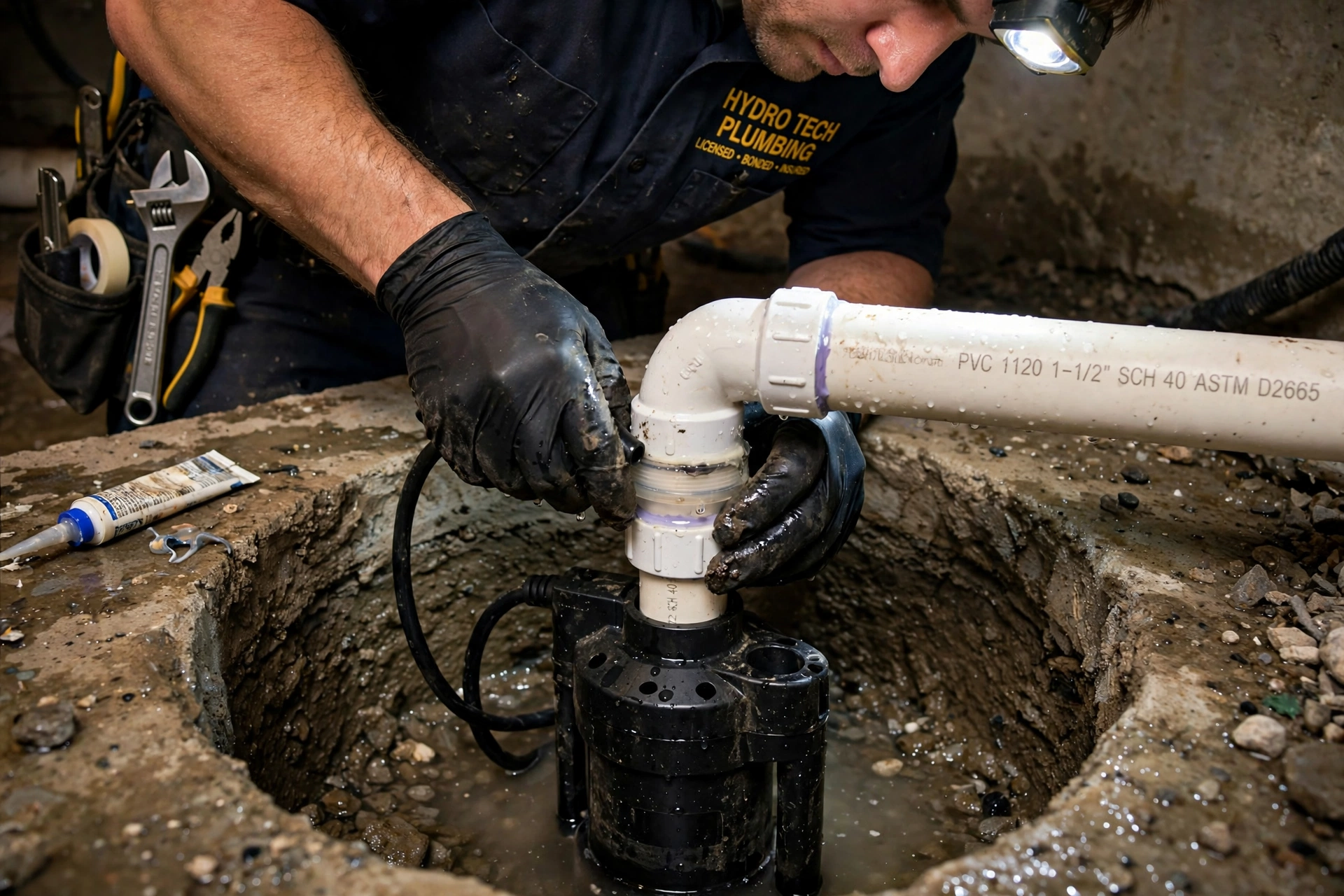
What a Proper Installation Includes
A sump pump isn’t just dropping a pump in a hole. Here’s what we do:
- Proper pit sizing and placement — at the lowest point, sized for your water volume. Too small and it short-cycles and burns out.
- Primary pump selection — we size by gallons-per-hour based on your actual water intrusion, not a guess. Cast iron or stainless housing, not cheap thermoplastic.
- Check valve on the discharge — prevents pumped water from flowing back into the pit. Skipping this is the #1 DIY mistake.
- Discharge routing — piped well away from your foundation (minimum 10-20 feet), with freeze protection where needed. Dumping it next to the house just recycles the water.
- Battery backup system — secondary pump, battery, charger, and alarm.
- High-water alarm — audible alert (and optional WiFi alert to your phone) if water rises above normal levels.
Honest Pricing
A complete primary sump pump installation runs $800–$1,800. Adding a battery backup system brings the total to $1,500–$3,000. If we need to dig the pit and break concrete, add $500–$1,000. Water-powered backups run $400–$800 additional. One flat quote, no surprises.
Signs You Need One (Before the Flood)
Don’t wait for standing water. Call us if you notice: musty smells in the basement, efflorescence (white mineral deposits) on concrete walls, rust on metal at floor level, water stains on walls, or any history of seepage. An ounce of prevention here is worth about fifty thousand dollars of cure.
Maintenance: 10 Minutes Twice a Year
Pour a bucket of water in the pit every spring and fall — the pump should kick on and drain it. Check the discharge pipe for obstructions. Test the battery backup. That’s it. We’ll show you exactly how during installation, and we offer annual checkups if you’d rather not think about it.
Sump Pump FAQs
How do I know what size pump I need?
We calculate based on your pit size, water table, and worst-case inflow. Most residential homes need 1/3 to 1/2 HP pumping 2,000-3,500 GPH. Oversizing wastes money; undersizing fails when you need it most. We measure, not guess.
Will the pump run constantly and drive up my electric bill?
No. Sump pumps only run when water triggers the float switch. In dry months, it may not run at all. Even in wet months, electricity cost is negligible — a few dollars.
How long does a sump pump last?
Quality primary pumps last 7-10 years. Battery backups need new batteries every 3-5 years. We install pumps with replaceable switches (the part that fails most) so you’re not replacing the whole unit.
What happens if both the power AND the battery fail?
This is why we also offer water-powered backup pumps — they run on municipal water pressure with zero electricity. Triple redundancy is available for finished basements with high-value contents.
Can you install a sump pump in a crawlspace?
Absolutely. Crawlspace installations are common — we dig a smaller pit, install the pump, and often recommend encapsulation or a vapor barrier at the same time for full moisture control.
Do I need a permit?
Most California jurisdictions don’t require permits for sump pump installation, but discharge routing must comply with local codes (can’t dump into sanitary sewer in most areas). We handle all of that.
Don’t Wait for the Next Storm
Professional sump pump installation with battery backup — your basement stays dry no matter what.
Licensed C-36 • Battery Backup Experts • Upfront Pricing