
Septic Tank Services in California
Sewage backing up? Drains gurgling? Wet spots in the yard that smell wrong? If your home runs on a septic system — and hundreds of thousands of California homes do — you need a plumber who actually understands septic. We pump, repair, inspect, and install septic systems across the state, with honest pricing and no scare tactics.
Get Your Free Quote
60 seconds · No obligation · Upfront pricing
How Do You Know Your Septic Tank Needs Attention?
Most septic problems announce themselves the same way, and I hear the same stories on every call. Here are the signs — in the order homeowners usually notice them:
1. Drains are slow everywhere at once. One slow drain is a clog. Every drain being slow — sinks, showers, toilets — means the problem is downstream of your house. The tank is full, the outlet is blocked, or the drain field is failing.
2. Gurgling sounds. That “glug-glug” from the toilet when you run the sink, or from the tub drain when you flush. That’s air being pushed back through the system because wastewater can’t flow forward properly. It’s one of the earliest warning signs.
3. Sewage odors — inside or outside. A healthy septic system is sealed; you should never smell it. Odors around the tank lid, over the drain field, or (worst case) inside the house mean something has failed: a full tank, a cracked pipe, a dry trap, or a venting problem.
4. Wet, soggy, or suspiciously green patches in the yard. Especially over or near the drain field. If one section of your lawn is thriving suspiciously well while the rest struggles, it’s being fertilized by effluent. That’s not a good thing.
5. Sewage backing up into the house. This is the emergency stage. Toilets won’t flush, wastewater comes up in the shower or tub. If this is happening, stop using water and call immediately — every gallon you send down makes it worse.
6. It’s been 3-5 years since the last pump. Honestly, most people only think about their septic when something goes wrong. If you can’t remember the last pumping, you’re overdue. A routine pump is $400-$700; a failed drain field is $10,000-$25,000. The math is obvious.
What Septic Pumping Actually Involves (And Why “Just Pump It” Isn’t Always the Answer)
There’s a misconception that every septic problem is solved by pumping. Pumping is maintenance — it removes the accumulated sludge and scum layers so the tank can keep doing its job. It’s essential, and it should happen every 3-5 years for a typical household. But pumping doesn’t fix a cracked baffle, a crushed outlet pipe, a saturated drain field, or a failed pump.
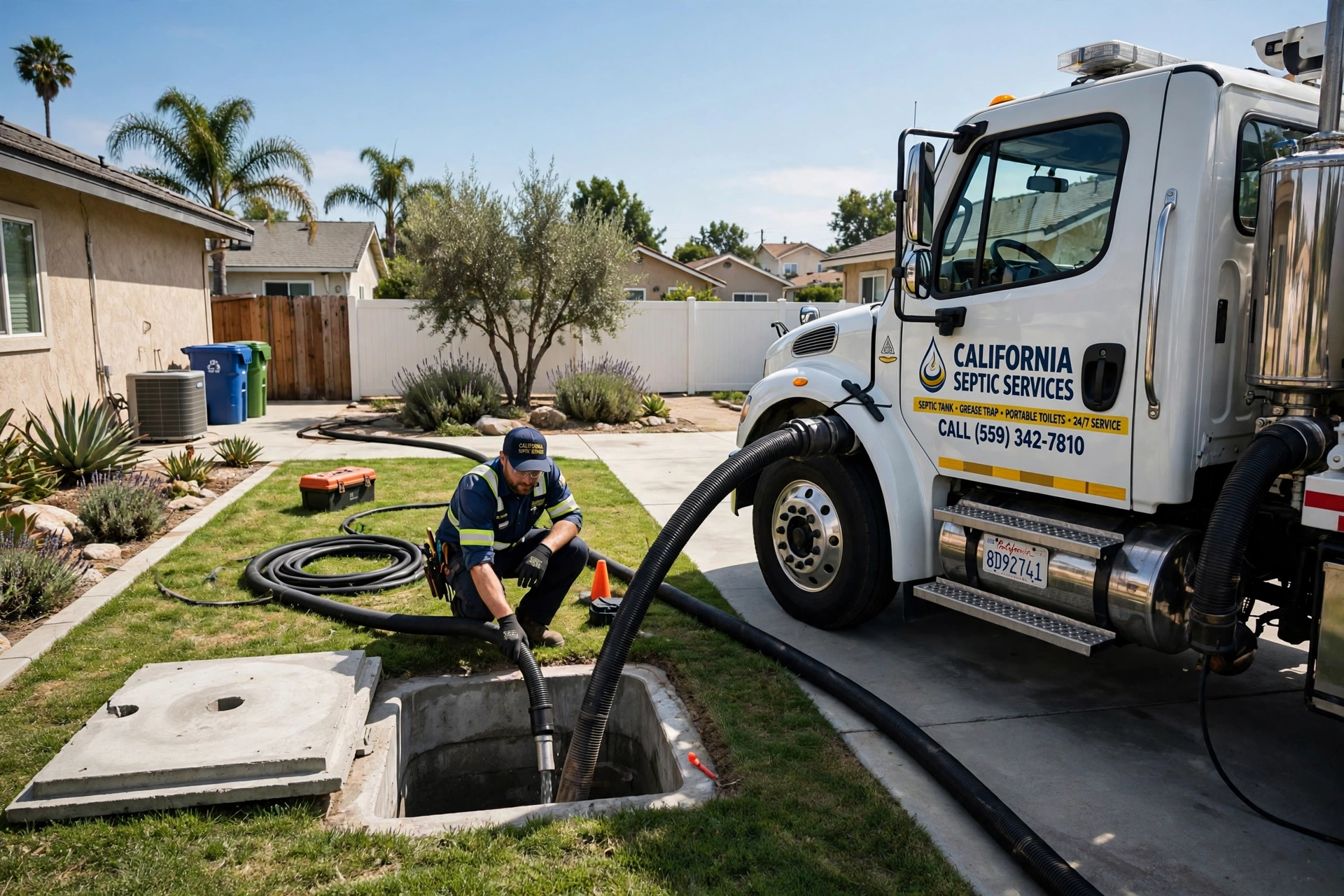
Here’s what a proper septic service visit looks like when we do it:
- We locate and expose the tank. Many homeowners don’t know where their tank is. We use records, probes, and electronic locators to find it — and we’ll mark it for you so you always know.
- We pump the entire tank — not just the liquid layer. Some cut-rate operators pump only the easy liquid off the top and leave the sludge. That’s like changing your oil but leaving the sludge in the pan. We pump it down completely.
- We inspect while it’s open. This is the part most companies skip. With the tank empty, we check the baffles (the dividers that keep solids from escaping to the drain field), the inlet and outlet tees, the tank walls for cracks, and the effluent filter if you have one. A $50 baffle replacement caught during pumping saves a $15,000 drain field replacement later.
- We check the drain field. We look for standing water, odors, and lush growth patterns. If the field is showing stress, we’ll tell you honestly — and tell you what your options are before it fails completely.
- We give you a written report. Tank condition, sludge levels, baffle condition, drain field observations, and a recommended pumping schedule based on your household size — not a generic “see you in 3 years.”
Septic Repairs: What’s Fixable and What’s Not
Not every septic problem means a new system. Here’s my honest breakdown from years of septic work:
Fixable (hundreds to low thousands): Broken or missing baffles. Clogged effluent filters. Cracked inlet/outlet pipes. Failed septic pumps (for systems with pump chambers). Crushed distribution box. Root intrusion in the lines between house and tank — we can often clear roots with hydro jetting and treat with root inhibitors.
Sometimes fixable: A drain field that’s starting to fail but isn’t fully saturated. Jetting the lateral lines, adding bacterial treatments, and resting the field (diverting to a reserve area if you have one) can buy years. But I won’t promise a miracle — if the biomat is fully developed and the soil is saturated, these are temporary measures.
Not fixable — replacement needed: A collapsed tank. A drain field that’s completely failed (standing effluent, total saturation). A system that’s undersized for the household and has been overloaded for years. In these cases, I’ll tell you straight — no point spending $3,000 on repairs when the system needs $18,000 of replacement.
The California wrinkle: Many counties now require upgraded systems (with advanced treatment units) when you replace a failing septic, especially near waterways, in high-groundwater areas, or in designated impaired water bodies. This can add $10,000-$20,000 to a replacement. We’ll navigate the permit process with you — we deal with county environmental health departments regularly and know what each one requires.

Buying a Home With Septic? Get It Inspected First.
This is the single most valuable piece of septic advice I can give: if you’re buying a rural California property with a septic system, get a full septic inspection before you close. Not a “the toilets flush fine” check — a real inspection with the tank pumped and opened, the drain field evaluated, and a written report.
I’ve seen buyers inherit $20,000+ septic replacements they could have negotiated with the seller — or walked away from. A $500-$800 inspection is the cheapest insurance in real estate. We do pre-purchase septic inspections throughout California, and we’ll give you a straight assessment: system age, condition, remaining life estimate, and what it’ll cost to maintain or replace.
What we check: tank size vs. bedroom count (undersized tanks are common in older homes that have been expanded), baffle condition, drain field health, setback compliance with current code, and whether the system has been properly permitted. Unpermitted systems are surprisingly common in rural California — and they become your problem the day you buy the house.
Septic Do’s and Don’ts From a Plumber Who’s Seen It All
Do: Pump every 3-5 years. Spread out laundry loads (don’t do 6 loads on Saturday). Fix leaky faucets and running toilets — extra water is the enemy of drain fields. Keep records of pumping and service. Know where your tank and drain field are.
Don’t: Flush wipes (even “flushable” ones — they’re the #1 cause of septic clogs I see). Pour grease down the drain. Use a garbage disposal heavily (it doubles your solids load). Drive or park over the drain field. Plant trees near the system — roots seek water and will find your pipes. Pour chemicals, paint, or medications down the drain.
About additives: Those “septic treatment” packets and monthly additives? Your tank already has all the bacteria it needs from normal waste. Save your money. The only thing that extends septic life is regular pumping and not abusing the system.
Septic Service Costs — Honest Numbers
Septic pricing varies by tank size, access, and county requirements. Here’s what to expect:
- Routine pumping (1,000-1,500 gal tank): $400-$700. Larger tanks or difficult access (buried deep, under concrete) run higher.
- Septic inspection (with pumping): $500-$800. Pre-purchase inspections with written report: $600-$900.
- Baffle replacement: $300-$800 depending on access.
- Effluent filter cleaning/replacement: $150-$400.
- Line jetting (roots/debris): $400-$1,000.
- Septic pump replacement: $800-$2,000 including labor.
- Drain field repair (partial): $3,000-$8,000.
- Full system replacement: $15,000-$30,000+ depending on county requirements, soil conditions, and whether advanced treatment is required.
Every job gets an upfront written price before we start. No surprises, no “while we were in there” upsells.
Septic Tank FAQs
How often should I pump my septic tank?
Every 3-5 years for a typical household. Larger families, garbage disposal use, or smaller tanks need more frequent pumping. The only way to know for sure is to have the sludge levels measured — we do this during every service visit and set your schedule based on actual data, not guesswork.
Can I just pump it myself or hire a cheap guy with a truck?
Septic pumping requires a licensed hauler who disposes of waste at approved facilities — it’s regulated for good reason. Unlicensed dumping is illegal and carries heavy fines. Beyond legality, a proper service includes inspection of baffles, tees, and the drain field. A cheap pump-and-go skips all of that.
My drains are slow — is it the septic or a clog?
If one fixture is slow, it’s probably a local clog. If everything is slow simultaneously — all sinks, showers, and toilets — the problem is downstream: full tank, blocked outlet, or failing drain field. That’s a septic issue, not a drain cleaning issue. We’ll diagnose which one before quoting any work.
What happens if I never pump my septic tank?
Solids build up, escape through the outlet, and clog your drain field. A clogged drain field can’t be pumped clean — it has to be replaced at $10,000-$25,000. Regular $500 pumping prevents this. It’s the most lopsided cost-benefit ratio in all of home maintenance.
Do those monthly septic additives actually work?
No. Your tank already contains all the bacteria it needs. Additives don’t reduce the need for pumping and some can actually harm the system by keeping solids suspended. Save your money for the actual pumping.
I’m buying a house with septic — what should I check?
Get a full septic inspection before closing: tank pumped and opened, baffles checked, drain field evaluated, system size verified against bedroom count, and permit status confirmed with the county. A $600-$900 inspection can save you from inheriting a $20,000 replacement. We do pre-purchase inspections statewide.
Septic Problems? Let’s Take a Look.
Pumping, repairs, inspections, and installations — honest assessments and upfront pricing anywhere in California.
Licensed C-36 • Septic Pumping & Repair • Upfront Pricing