Tankless Water Heater Error Codes: What They Mean
Your tankless water heater was working fine, and now the display is flashing a code and you’ve got cold water. Before you assume the unit is dead, know this: error codes are the unit telling you exactly what’s wrong. Most of them point to maintenance issues, not failures. Here’s what the common ones mean and what to do about each.
First: How to Read Any Error Code
Every brand uses its own code list — Rinnai, Noritz, Navien, and Rheem all differ. The code itself (usually two digits) identifies the fault; your owner’s manual has the full list for your model. What follows are the most common codes across the major brands and what they typically indicate. When in doubt, look up your specific model’s manual before acting.
Code 10 / Air Supply or Exhaust Blockage
This one means the unit can’t breathe properly. Common causes: a bird nest or debris in the vent terminal, a disconnected vent pipe, or — in a very California scenario — the exterior vent blocked by landscaping that grew into it. Check the outdoor vent termination for obstructions first. If the venting looks clear and the code persists, the fan motor or pressure switch may need professional diagnosis.
Code 11 / Ignition Failure & Code 12 / Flame Failure
Code 11 means the unit tried to ignite and couldn’t; code 12 means the flame lit then dropped out. Causes run from simple to serious: gas supply interrupted, a dirty flame rod, low gas pressure, or a failing igniter. Check that the gas valve to the unit is fully open and other gas appliances work. If gas is fine, the flame rod likely needs cleaning — a maintenance task a tankless technician handles routinely.
Safety note: if you smell gas around the unit, stop troubleshooting. Leave the area and call your gas company from outside.
Code 14 / Overheat & Scale-Related Codes
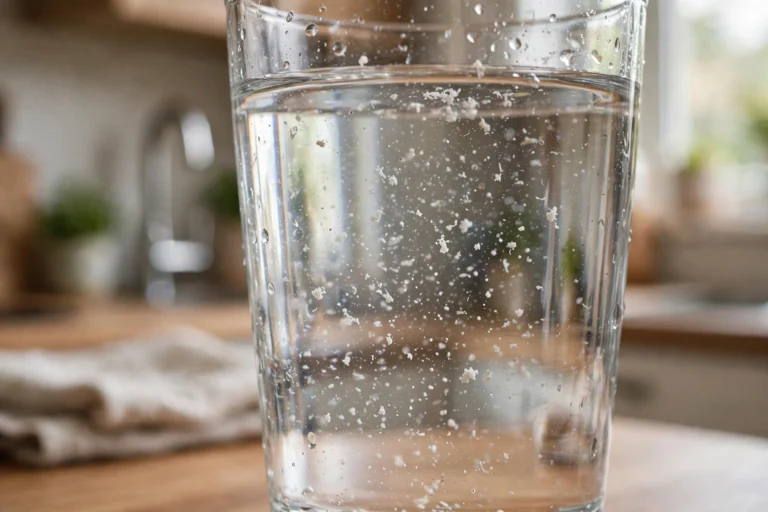
Overheat codes are California’s signature tankless problem. Our hard water lays scale inside the heat exchanger, restricting flow and causing hot spots. The unit overheats, throws the code, and shuts down to protect itself. The fix is descaling — circulating a vinegar or descaling solution through the unit with a pump. This is the single most important tankless maintenance task in hard-water areas, needed every 12–24 months. Skip it long enough and scale can damage the heat exchanger permanently.
Flow and Temperature Sensor Codes
Various codes (often in the 30s–60s depending on brand) point to inlet/outlet temperature sensors or flow sensors reading out of range. Sometimes it’s a genuine sensor failure; sometimes scale buildup is insulating the sensor and giving false readings — which circles back to descaling. If a descale doesn’t clear a sensor code, the sensor itself needs replacement.
What You Can Check Yourself
Before calling anyone: confirm the gas valve is open, check the outdoor vent for blockages, make sure the unit has power (check the breaker — tankless units need electricity for the controls), and look up your exact code in the manual. Many codes clear with a power reset (turn the unit off for 30 seconds). If the code returns, it’s a real fault, not a glitch.
When to Call a Plumber
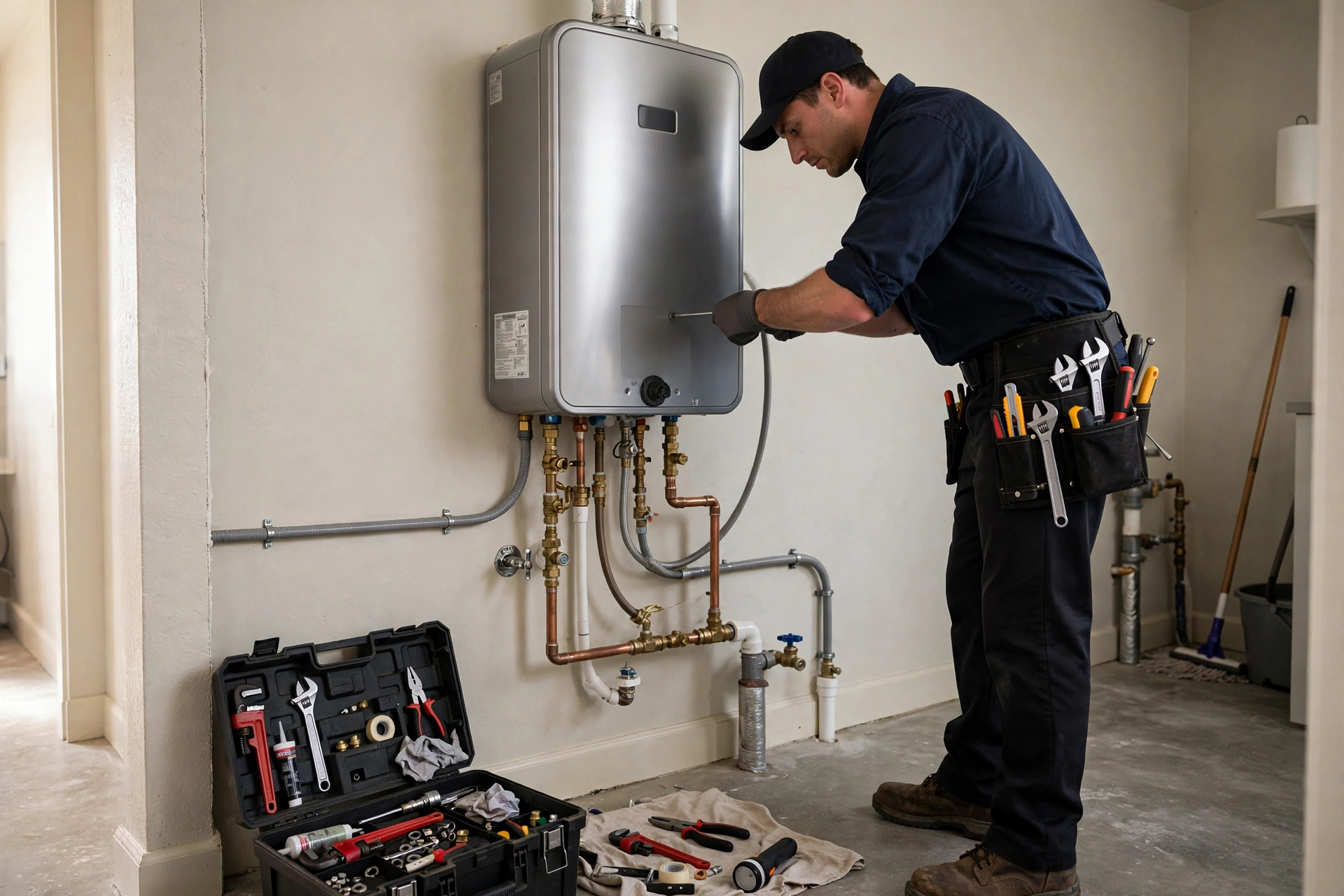
Call if the code involves gas ignition or flame failure and basic checks don’t resolve it, if overheat codes keep returning after descaling, or for any code your manual flags as requiring service. Tankless units are sophisticated appliances — the sealed combustion chamber and gas train aren’t DIY territory. A technician with the brand’s diagnostic procedures can pinpoint the fault fast instead of throwing parts at it. For persistent issues, professional water heater service covers diagnosis and repair in one visit.
Frequently Asked Questions
Can I just reset the error code and keep using it?
A reset clears the display, not the problem. If the underlying fault is still there, the code comes back — usually quickly. Use a reset as a diagnostic step (does it return?), not a fix. If you’re unsure what a code means, photograph the display before resetting so you have the exact code to reference.
How often should a tankless unit be descaled in California?
Every 12 months in hard-water areas, up to 24 months with softer water or a scale inhibitor. If you don’t know your water hardness, yearly is the safe default — it’s cheap insurance for a multi-thousand-dollar appliance.
Do error codes mean my tankless unit is dying?
Rarely. The vast majority of codes trace to maintenance (scale, dirty sensors, vent blockage) or external issues (gas supply, power). Actual heat-exchanger failure is uncommon before year 12–15 with proper care.
Should I repair or replace a tankless unit with repeated codes?
If it’s under 12 years old and the issues are maintenance-related, repair and start a descaling schedule. Past 15 years with recurring faults, replacement starts making sense — newer units are also more efficient under current standards.