What Not to Flush: 12 Things That Clog Toilets
Toilets are engineered to handle exactly two things: human waste and toilet paper. Everything else is a gamble, and the house usually loses. I pull an astonishing variety of objects out of clogged toilets and sewer lines, and the pattern never changes — most clogs start with something that should have gone in the trash.
Here are the twelve worst offenders, one by one.
1. “Flushable” Wipes
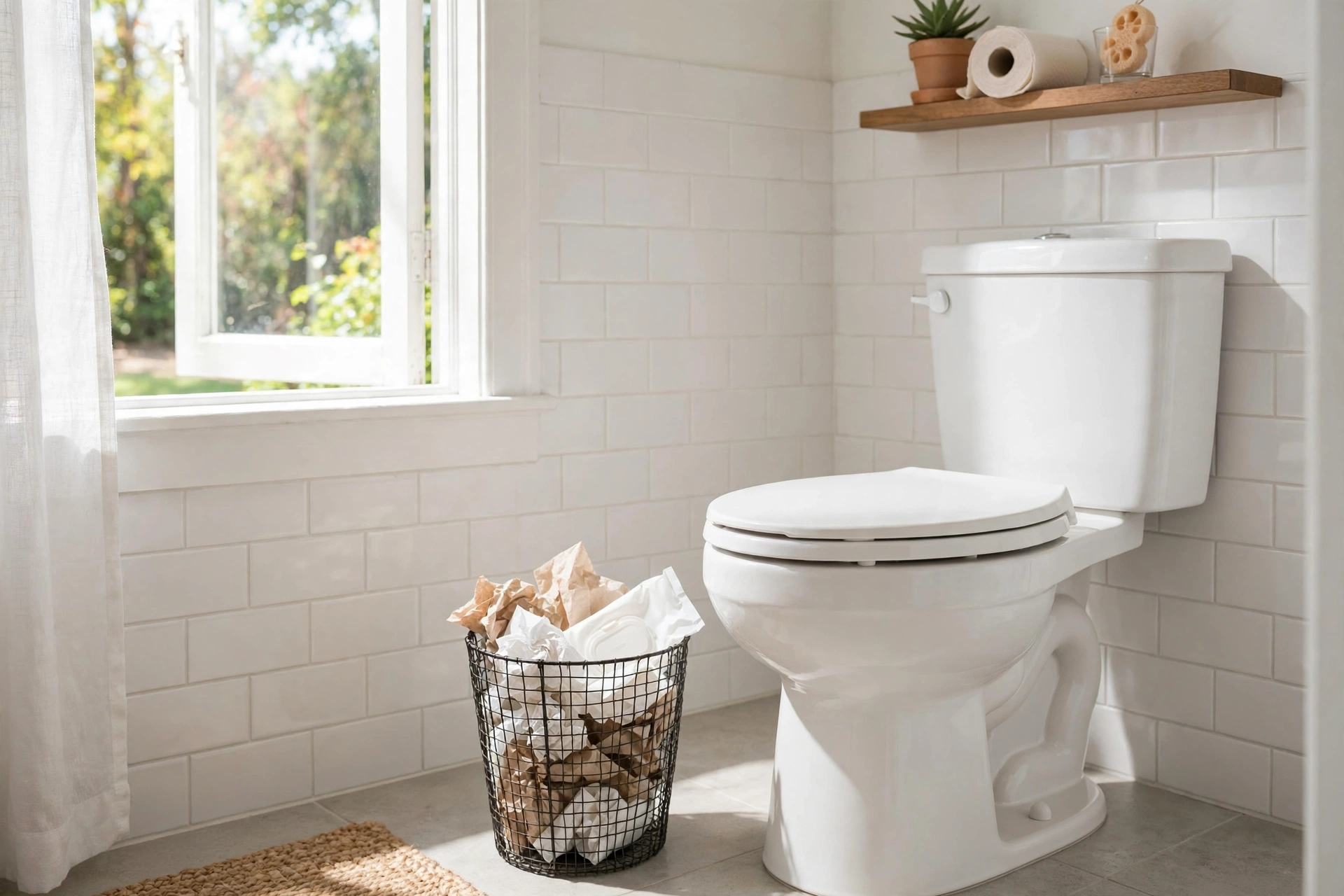
The biggest lie in the bathroom aisle. “Flushable” wipes don’t break down like toilet paper — they hold together through your pipes, snag on any roughness or root intrusion, and accumulate into massive clogs. Wastewater agencies across California spend millions clearing wipe blockages. No matter what the package says, wipes go in the trash.
2. Paper Towels and Napkins
They feel like paper, but they’re engineered to stay strong when wet — the exact opposite of toilet paper, which is designed to disintegrate. A few sheets can lodge in the toilet trap and start a clog that grows with every flush.
3. Feminine Hygiene Products
Pads and tampons are designed to absorb and expand. In a drain line, that’s catastrophic — they swell, snag, and create blockages that a plunger won’t touch. Always bag and trash them.
4. Cotton Balls and Cotton Swabs
Cotton doesn’t dissolve. Cotton balls clump together in water, and swabs wedge sideways in pipes. They seem small and harmless; they’re neither.
5. Dental Floss
Floss is thin, strong, and essentially indestructible in water. Worse, it tangles — wrapping around other debris and forming net-like clogs that snare everything passing through. It can even wrap around pump components in septic or grinder systems.
6. Hair
Shower and sink drains get the blame, but plenty of hair goes down toilets too — especially in households where people brush or style hair near the toilet. Hair combines with soap and paper into dense, ropey clogs.
7. Cat Litter
Even “flushable” cat litter is a terrible idea. Clay-based litters harden like cement in water, and all litters carry the risk of clogging plus parasites that wastewater treatment isn’t designed to fully handle. Scoop it, bag it, trash it.
8. Medications
Old pills don’t just risk clogs — they pass through treatment plants into waterways. California has drug take-back programs and pharmacy drop-off kiosks specifically for this. Never flush meds.
9. Cooking Grease
Pouring grease down the toilet instead of the sink doesn’t help — it solidifies in the sewer line just the same, and toilet drains have tighter bends than sink drains. Collect it in a container and trash it.
10. Condoms
Latex doesn’t break down in water. Condoms inflate, snag, and cause stubborn blockages — and they’re a notorious cause of septic system failures.
11. Diapers and Baby Wipes
Diapers expand dramatically when wet and will clog a toilet almost instantly. Baby wipes behave exactly like “flushable” wipes — they don’t disintegrate. Both go in the trash, always.
12. Bandages and Gauze
Adhesive bandages stick to pipe walls; gauze unravels into stringy masses. Small items, big problems. Trash them.
What to Do When the Toilet Keeps Clogging
An occasional clog from too much paper is normal. But if the same toilet clogs repeatedly — or multiple fixtures clog at once — the problem is deeper than the bowl. Recurring clogs often point to a partial blockage in the main sewer line: root intrusion, a belly in the line, or years of accumulated buildup. A sewer camera inspection shows exactly what’s going on down there without any digging. For stubborn drain blockages, professional drain cleaning clears the line properly instead of just poking a hole through the clog.
When to Call a Plumber
Call if plunging doesn’t clear the clog after a few honest attempts, if water backs up into the tub or shower when you flush, if you hear gurgling from other drains, or if sewage odors appear. Those are main-line symptoms, not toilet problems — and they get worse fast. An emergency plumber is warranted when sewage is actively backing up into the home.
What Not to Flush FAQs
Are “flushable” wipes really not flushable?
Correct — they’re one of the leading causes of sewer clogs nationwide. They pass the manufacturer’s narrow test but don’t break down in real plumbing systems. Trash them, every time.
Can I flush tissues like Kleenex?
Occasionally, in small amounts, facial tissue is less risky than paper towels — but it’s still stronger than toilet paper when wet. If your plumbing is older or prone to clogs, don’t risk it.
Why does only one toilet in my house keep clogging?
That toilet may have a partial obstruction in its trap or the branch line serving it — a lodged object, mineral buildup in an older low-flow model, or a venting issue. If it’s chronic, it needs diagnosis, not just plunging.
Is it safe to use chemical drain cleaners in a toilet?
No. Caustic cleaners can crack porcelain with heat, damage the wax ring seal, and create a chemical hazard for anyone servicing the toilet later. Use a plunger or a toilet auger instead.