Hard Water in California: Signs, Damage & Treatment Options
“My faucets have this white crust I can’t scrub off, my shower head clogs every few months, and my skin feels like sandpaper after every shower. Is something wrong with my water?”
I hear some version of that call every single week, from San Diego to Sacramento. And the answer is almost always the same: you’ve got hard water.
Most of California sits on mineral-heavy groundwater, and by the time it travels through aquifers and municipal systems to your tap, it’s picked up a full load of calcium and magnesium. The Inland Empire, big parts of the Central Valley, and plenty of SoCal suburbs run some of the hardest water in the country — often 10 to 20+ grains per gallon. For reference, anything over 7 is officially “hard.”
It’s not a health hazard. But it is quietly rough on your home. Here’s how to spot it, what it’s doing behind your walls, and what actually fixes it.
The Telltale Signs You’re Dealing With Hard Water
Hard water announces itself — you just have to know what you’re looking at:
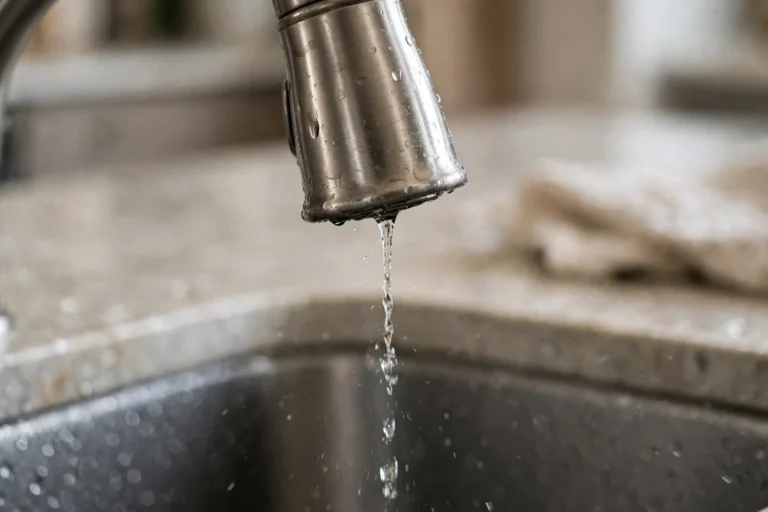
- White, chalky crust on faucets, showerheads, and glass shower doors that keeps coming back no matter how often you clean.
- Spotty dishes straight out of the dishwasher, and glasses that look cloudy.
- Soap that won’t lather. Shampoo feels like it never quite rinses out, and you use twice as much detergent as the box says.
- Stiff, faded laundry. Towels turn scratchy and colors dull faster than they should.
- Dry, itchy skin and dull hair — mineral film left behind after every shower.
- Weak flow at one fixture while the rest of the house is fine — scale narrowing that faucet or showerhead.
If you’re nodding along to three or more of these, get your water tested. A pro test takes five minutes and tells you exactly how many grains per gallon you’re dealing with — which decides what fix makes sense.
What Hard Water Quietly Does to Your Plumbing
The cosmetic stuff is annoying. The hidden damage is expensive.
Your water heater takes the worst of it. Minerals settle and bake onto the bottom of the tank, forming sediment that the burner has to heat through. You’ll hear popping or rumbling, your energy bill creeps up, and the tank dies years early — a heater that should last 10 to 12 years often gives up at 7 or 8 in hard-water areas. That’s a replacement you didn’t need yet, years ahead of schedule.
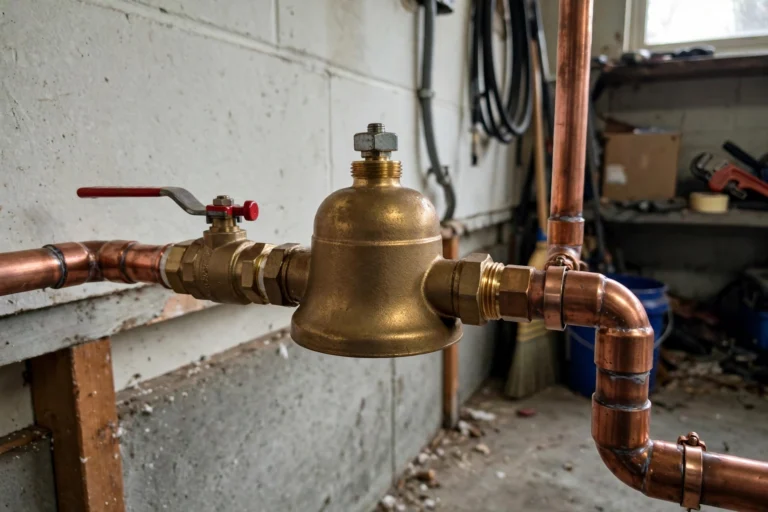
Inside your pipes, scale builds up layer by layer, narrowing the inside diameter. Flow drops, pressure strains joints and valves, and in homes with older galvanized or copper lines, that extra strain finds the weakest point. Most California homes sit on slab foundations, where a repiping job means cutting concrete — so protecting the pipes you have matters more here than almost anywhere.
Appliances suffer too: dishwashers, washing machines, and ice makers all wear out faster when heating elements and valves crust over with scale.
Your Treatment Options — What Actually Works
There’s no shortage of gadgets claiming to “fix” hard water. Here’s what licensed plumbers actually install:
1. Ion-exchange water softener — the gold standard. It swaps calcium and magnesium for sodium or potassium as water flows through a resin bed. Dishes come out clear, skin stops itching, and your water heater and appliances finally get a break. One heads-up: some Southern California water districts restrict salt-based softener discharge because of brine entering the wastewater system, so check your local rules — or ask your installer — before you buy.
2. Salt-free conditioner (TAC). These don’t remove minerals; they change their structure so the minerals can’t stick to surfaces. No salt, no discharge, no restrictions — a solid option where softeners aren’t allowed, though it won’t give you that classic “soft water” feel.
3. Reverse osmosis at the kitchen sink. If your main complaint is taste and drinking water, an under-sink RO unit handles that without treating the whole house.
4. Whole-house sediment + carbon filter. A good first stage that takes out sediment, chlorine taste, and odor before water reaches your softener or your fixtures.
The right setup depends on your test results, your district’s rules, and what bothers you most. If you’re tired of fighting scale, take a look at our water filtration and softening services — we’ll test your water on-site and size a system to your home, with upfront pricing before any work starts.
And if hard water has already done a number on your heater or fixtures, the team at Pro Plumbers California handles repairs statewide, 24/7.
Q: How do I find out exactly how hard my water is?
A: A professional test measures hardness in grains per gallon — over 7 is hard, over 10.5 is very hard. Many Inland Empire and Central Valley homes test at 15+. Hardware-store test strips give a rough idea, but a pro test is more accurate and usually free with a service call.
Q: Will a softener fix the low pressure I already have?
A: It stops new scale from forming, but it won’t dissolve years of buildup already narrowing your pipes. If flow is already restricted, you may need descaling or partial repiping first — then the softener protects the new work.
Q: Is softened water safe to drink?
A: Yes. It adds only a small amount of sodium — roughly what you’d get from a slice of bread per day’s worth of water. Many families still add an RO tap at the kitchen sink for drinking water, which is the best of both worlds.