
Sewer Backup in Your Home? Here’s Exactly What to Do
Sewage coming up through a shower drain or bubbling out of a toilet is every homeowner’s nightmare, and it always seems to happen at the worst possible time. Take a breath. What you do in the first few minutes matters — for your health, your floors, and your wallet. Here’s exactly how to handle it, from a plumber who’s cleared hundreds of these across California.
The First 10 Minutes: What to Do Right Now
1. Stop using water. All of it. Every flush, every shower, every load of laundry sends more water into a drain system that has nowhere to go. Tell everyone in the house: nothing goes down any drain until this is resolved.
2. Don’t use chemical drain cleaners. This is critical. Caustic chemicals won’t clear a main-line blockage — they just sit in the pipe, and if a plumber has to cable or jet the line afterward, that chemical soup becomes a safety hazard for everyone involved. It can also damage older pipes.
3. Protect the area. Sewage is a genuine health hazard — it carries bacteria and pathogens. Keep kids and pets away, lay down towels at doorways to contain the spread, and don’t try to mop it up with your regular cleaning gear until the flow stops. If you have rubber gloves and boots, use them.
4. Check whether it’s just your house. Ask a neighbor if they’re having issues, or check your cleanout — that’s the capped pipe, usually near the front of the house. If sewage is standing in your cleanout, the blockage is in your line. If neighbors are affected too, it may be the city main, and a call to your water utility is in order.
5. Call a plumber — this is genuinely urgent. A sewer backup won’t fix itself, and it gets worse, not better. This is exactly what 24/7 emergency service is for. At Pro Plumbers California, we answer around the clock at (888) 555-0199.
What’s Causing It: The 4 Usual Culprits
Tree roots. The number one cause in California’s older neighborhoods. Clay and cast-iron sewer lines — standard in homes built before the 1980s — develop tiny cracks and loose joints, and tree roots relentlessly seek the moisture inside. Once in, they grow into a mat that catches everything. If you have big trees and an older home, roots are suspect number one.
Grease and buildup. Kitchen grease poured down drains cools and hardens inside the line, layer by layer, until the pipe’s diameter is a fraction of what it was. So-called “flushable” wipes make it dramatically worse — they don’t break down, whatever the packaging claims.
Collapsed or bellied pipe. Shifting soil — common with California’s expansive clays — can crack a line or create a low spot (a “belly”) where waste collects instead of flowing. These need a camera diagnosis to confirm.
The city main. Sometimes the problem isn’t yours at all. If multiple homes on your street are backing up, the municipal main may be blocked, and that’s the utility’s responsibility to fix.
How a Pro Actually Clears It
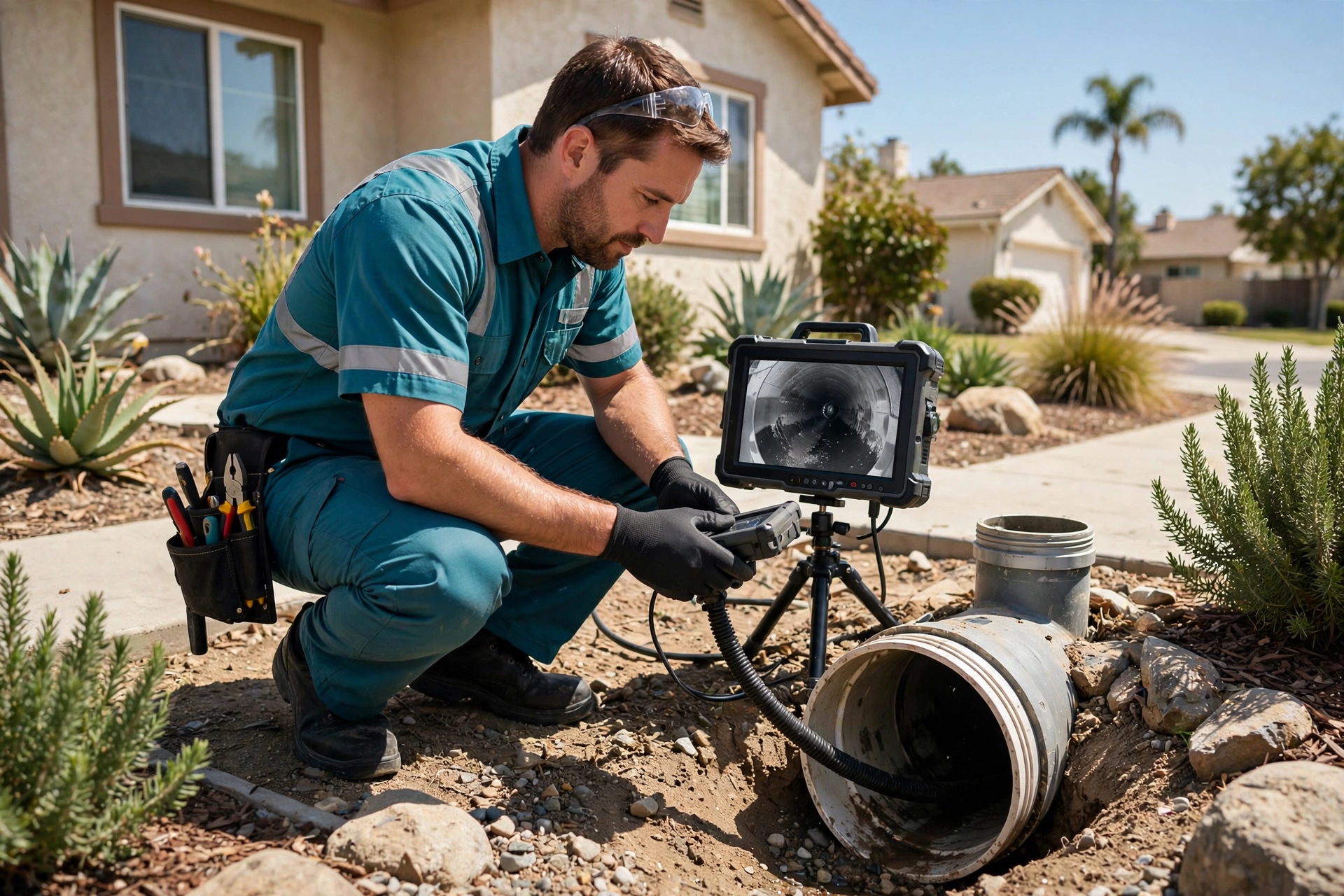
Here’s what proper sewer line service looks like. First, a camera inspection: we run a video camera down the line and show you exactly what’s wrong and where — roots at 40 feet, a belly at 60, a collapse at the property line. No guessing, and you see what we see.
For roots and buildup, the fix is usually a cable machine or hydro jetting — high-pressure water that scours the line back to full diameter. For damaged pipe, options range from trenchless repair (a liner installed inside the old pipe, no digging) to traditional replacement of the failed section. The right choice depends on the pipe’s age, material, and condition, and an honest plumber will show you the camera footage and explain the tradeoffs before quoting.
After the immediate crisis, ask about prevention: annual root treatment or jetting for root-prone lines, and never plant thirsty trees near your sewer lateral. A little maintenance is dramatically cheaper than another backup.
Q: Is a sewer backup really an emergency?
Yes. Sewage is a health hazard, and every gallon of water used makes it worse. It also won’t resolve on its own. Call for emergency service rather than waiting until morning.
Q: Can I clear a sewer backup myself?
A plunger won’t touch a main-line blockage, and rental drain machines are genuinely dangerous in untrained hands — the cable can kink, whip, or break. Chemical cleaners make things worse. This is a job for a pro with a camera.
Q: How much does it cost to fix?
It depends on the cause and the access — a straightforward root clearing costs far less than a collapsed-line replacement. That’s why we diagnose with a camera first and give you an upfront price before any work begins.


