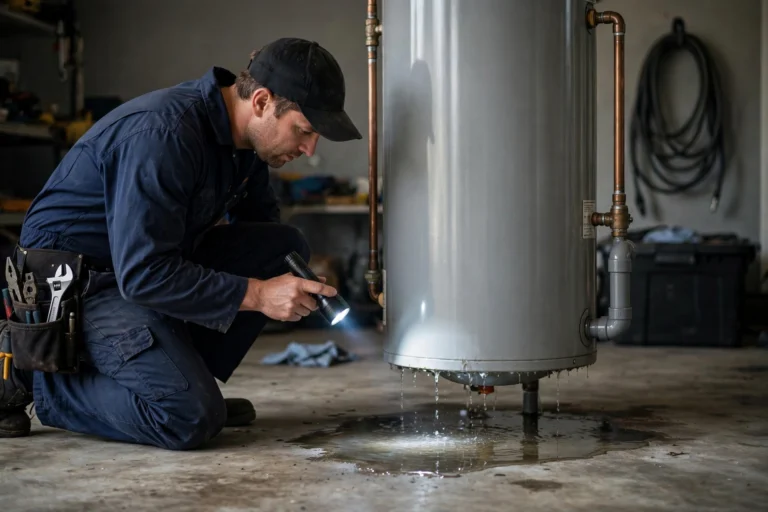
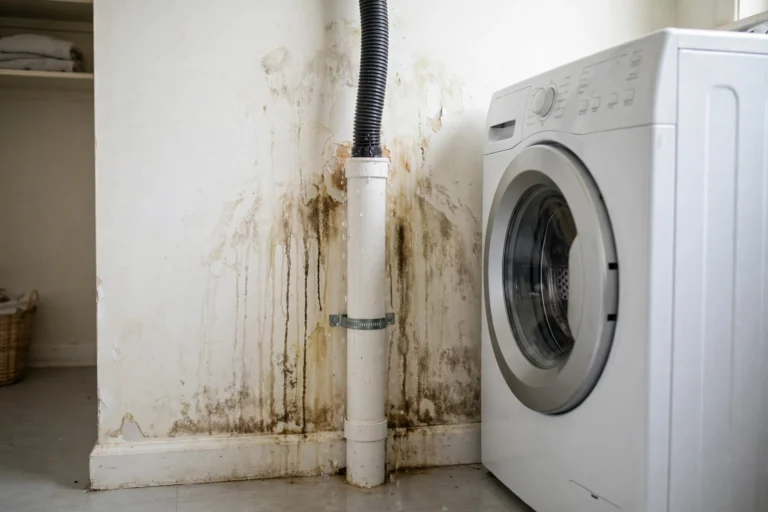
Multiple Drains Backing Up at Once? Read This First
One slow drain is an annoyance. Two or three backing up at the same time is a different animal entirely — and it changes what you should do. When multiple fixtures back up simultaneously, the problem is almost never in any single fixture. It is downstream, in a pipe they all share. Read this before you start plunging things at random, because the wrong move can make it worse.
Why Multiple Backups Point to the Main Line
Think of your plumbing like a tree. Each fixture — sink, tub, toilet — is a branch. The branches join into the main sewer line, the trunk, which carries everything out to the street. A clog in one branch affects one fixture. When several fixtures back up at once, the clog is in the trunk: the main line. Water from upstairs has nowhere to go, so it takes the path of least resistance — back up through the lowest open drain in the house, which is usually a shower, tub, or floor drain.
The Classic Pattern: Toilet Flush, Tub Fills
The telltale sign: you flush the toilet and water rises in the tub or shower. Or you run the washing machine and the toilet bubbles. These fixtures are on different branch lines, so the only place their paths cross is the main sewer. If you are seeing this, stop using water immediately — every flush and every faucet adds to the backup.
What to do right now: Stop all water use. Do not keep flushing “to see if it clears” — it will not, and you risk an overflow. Check your sewer cleanout (usually a capped pipe near the house foundation or in the yard). If sewage is standing in the cleanout or spilling from it, the blockage is between your house and the street. Call a plumber with camera equipment — this is exactly what a sewer camera inspection is for.
Tree Root Intrusion
The most common cause of main-line blockages in established California neighborhoods. Roots enter through pipe joints and tiny cracks seeking moisture, then expand into a dense mat that traps paper and waste. It builds slowly — months of slightly-slower drains — then crosses a threshold and everything backs up at once.
The fix: Cutting roots buys time but they regrow. A camera inspection shows how extensive the intrusion is; localized intrusion can sometimes be lined, while heavily compromised pipe needs repair or replacement. If your home still has clay or Orangeburg sewer pipe, plan for replacement rather than repeated cleanings.
Grease and Scale in the Main Line
Years of grease from the kitchen plus mineral scale from hard water coat the main line’s interior. Cast iron mains common in older California homes corrode and scale from the inside, narrowing steadily over decades. Eventually the pipe cannot pass a normal day’s wastewater and multiple fixtures back up.
The fix: Hydro jetting scours grease and scale off the pipe walls and restores flow — it is the right call when the pipe itself is structurally sound. If the camera shows heavy corrosion or collapsed sections, jetting is a temporary measure and replacement is the honest recommendation.
A Sagging or “Belly” in the Line
When soil settles under a sewer line, a section can sag — creating a low spot where solids settle out of the wastewater and accumulate. Bellies cause chronic, recurring backups that clear temporarily with snaking and always come back.
The fix: There is no chemical or cleaning that fixes geometry. A belly needs that section of pipe re-graded or replaced. This is another reason the camera inspection comes first: it distinguishes a belly (needs excavation) from buildup (needs cleaning), and the price difference is enormous.
What NOT to Do
- Do not keep running water to “push it through.” It has nowhere to go.
- Do not use chemical drain cleaner on a main-line blockage. It will not reach the clog in effective concentration, and you will be left with caustic water sitting in your pipes.
- Do not ignore it overnight hoping it drains on its own. Main-line blockages do not resolve themselves, and the backup can reach electrical outlets or damage flooring.
When to Call a Plumber
Multiple simultaneous backups are always a call-a-plumber situation — this is not a DIY scenario. Call immediately if sewage is backing up into tubs, showers, or floor drains; if water is coming up through the cleanout; or if the backup followed a heavy rain (which can signal a break letting groundwater in). Our emergency plumbers handle main-line backups around the clock, because sewage does not wait for business hours. Mention whether your home is on a slab — sewer access under slabs takes specialized approach, and it helps to know before we roll a truck.
Frequently Asked Questions
Why are my kitchen sink and bathtub backing up at the same time?
Because the blockage is downstream of where their drain lines join — in the main sewer line. Individual fixture clogs cannot affect two separate branch lines simultaneously. This needs professional diagnosis, not a plunger.
Can I use a drain snake from the cleanout myself?
A hand snake will not reach or clear a main-line blockage, and rental machines are genuinely dangerous in untrained hands — the cable can kink, whip, or break. Main lines need professional-grade equipment and a camera to verify the line is actually clear afterward.
Will homeowners insurance cover a sewer backup?
Standard policies typically exclude sewer backups unless you carry a specific sewer backup rider. Check your policy before you need it — the rider is usually inexpensive compared to a single backup cleanup.
How do I prevent main line backups?
Do not flush wipes or pour grease down drains, have the line camera-inspected every few years (especially with mature trees nearby), and consider preventive root treatment or cleaning on a schedule if roots are a known issue on your property.