Pilot Light Keeps Going Out? Causes & Fixes
You relight the pilot, the burner kicks on, hot water’s back — and by morning it’s out again. A pilot light that won’t stay lit is one of the most annoying water heater problems because it feels like it should be simple. The good news: the list of causes is short, and most of them are cheap to fix. But first, the safety rule that comes before everything else on this page.
Safety warning: if you ever smell gas — a rotten-egg or sulfur odor — do not try to relight anything. Don’t flip switches, don’t use your phone inside. Leave the house immediately and call your gas company from outside. A pilot problem is never worth a gas risk.
Cause #1: A Failing Thermocouple
This is the culprit more than half the time. The thermocouple is a small sensor that sits in the pilot flame and tells the gas valve “yes, there’s a flame here, keep the gas coming.” When it wears out, it stops sending that signal, and the gas valve shuts off the pilot as a safety measure — exactly as designed.
The classic symptom: the pilot lights fine when you hold the button down, but dies the moment you release it. A thermocouple is an inexpensive part, and replacement is quick for a pro. If you’re comfortable working around gas fittings and follow the heater’s instructions exactly, some homeowners do it themselves — but if there’s any doubt, this is a cheap service call, not a DIY gamble.
Cause #2: A Dirty or Clogged Pilot Orifice
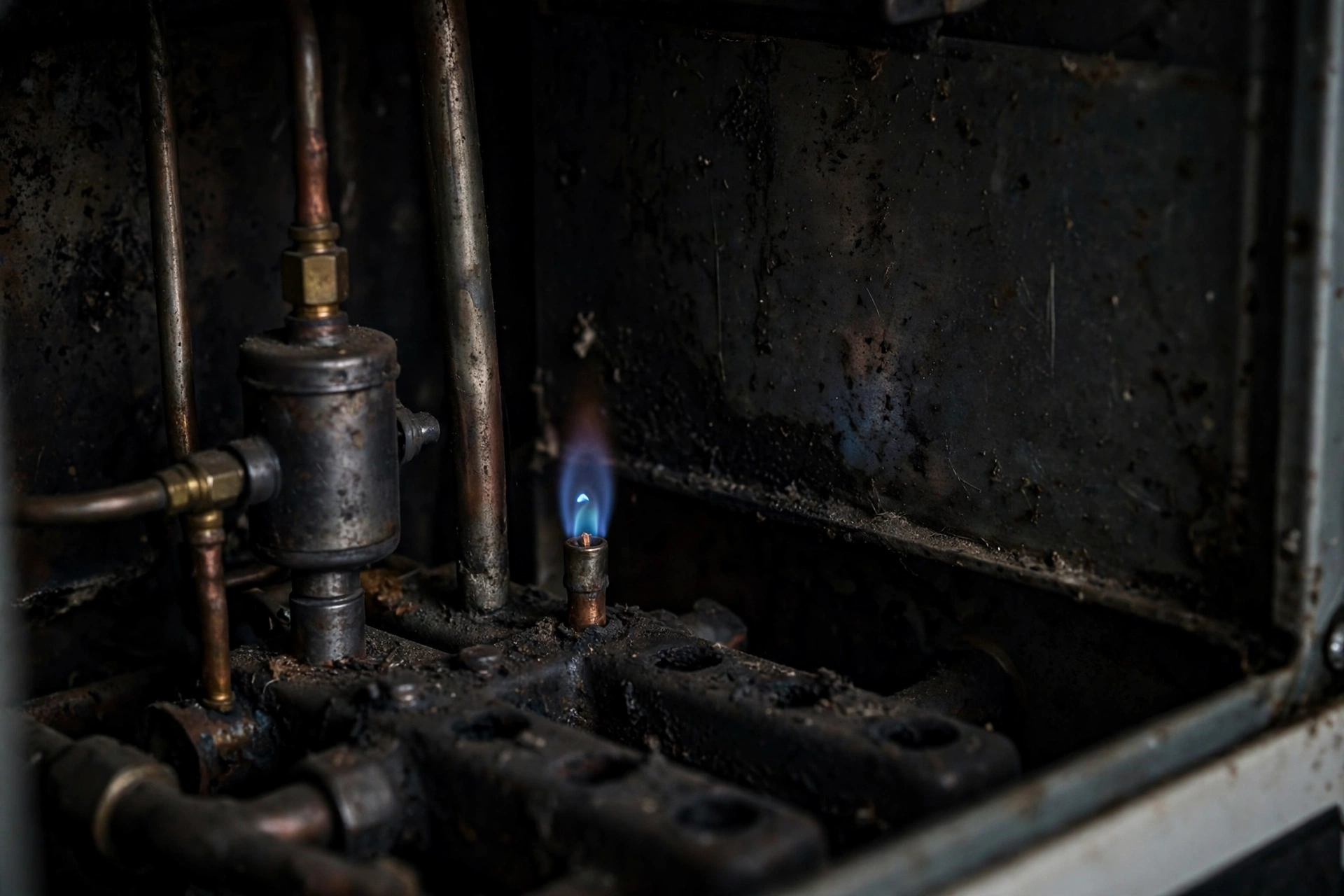
The pilot orifice is a tiny opening, and it doesn’t take much — dust, a spider web, a bit of corrosion — to partially block it. A weak, small, or yellow pilot flame (instead of a strong blue one) is the giveaway. The flame becomes too feeble to properly heat the thermocouple, so the system thinks the pilot is out even when it’s technically lit.
The fix is cleaning the pilot assembly: turn the gas off, remove the pilot tube, and clear the orifice. Compressed air or a fine wire does it. While you’re in there, check that the pilot flame, when lit, wraps firmly around the thermocouple tip — that’s what a healthy setup looks like.
Cause #3: Drafts Blowing the Pilot Out
Water heaters in garages and utility closets live in drafty places. A strong gust through a vent, a garage door left open on a windy day, or a missing draft hood can snuff a healthy pilot. If your pilot only goes out on windy days, drafts are your prime suspect.
Check that the draft hood is properly seated on top of the flue, that venting is intact, and that combustion air openings aren’t creating a wind tunnel straight at the burner compartment. Sometimes the fix is as simple as a vent cap or repositioning stored items that funnel air toward the heater.
Cause #4: A Failing Gas Control Valve
If the thermocouple is new, the pilot is clean, and there are no drafts, the gas control valve itself may be failing. This is the main valve assembly on the front of the heater — the part with the dial you turn to pilot. Internal components wear out, and when they do, the valve won’t hold the pilot circuit open.
This isn’t a DIY part. Gas valve replacement involves breaking gas connections and needs proper leak testing afterward. On a heater that’s already 10+ years old, a failed gas valve is often the nudge toward full water heater replacement instead — you’re putting a few hundred dollars into a tank with limited life left.
Cause #5: Low Gas Pressure or Supply Issues
Rare, but worth mentioning: if the pilot is weak across all your gas appliances, or the problem started right after gas line work, supply pressure could be the issue. Check whether your furnace or stove are also acting up. If it’s isolated to the water heater, it’s the heater, not the supply. If multiple appliances are affected, call the gas utility — that’s their side of the meter.
When to Call a Plumber
Call immediately if you smell gas, period. Call soon if the pilot won’t stay lit after one careful relight attempt, if you see soot or scorch marks around the burner compartment (that suggests improper combustion), or if the heater is old enough that repeated pilot issues are piling onto other problems. A water heater technician can test the thermocouple output, check gas pressure, and tell you in one visit whether it’s a $20 part or time for a new unit.
Frequently Asked Questions
How do I relight my water heater pilot safely?
Turn the gas control to pilot, hold the reset button, and light the pilot through the access panel (long lighter or match — never your fingers near the burner). Keep holding the button 30–60 seconds after it lights so the thermocouple heats up, then release slowly and turn the dial to on. Your heater’s label has model-specific instructions — follow those over any generic guide.
Why does my pilot go out only at night?
Usually temperature-related drafts or a marginal thermocouple. As things cool overnight, metal contracts and a weak thermocouple connection can open just enough to drop the signal. Wind picking up in the evening points to drafts.
Can I just leave the pilot out and use cold water until the plumber comes?
Yes — a water heater with the pilot out is just a cold water tank. It’s safe as long as the gas control is in the off or pilot position and you don’t smell gas. No hot water for a day or two beats a gas hazard.
Should I upgrade to a tankless unit if my pilot keeps failing?
If the tank is old, it’s worth considering. Tankless units have electronic ignition — no standing pilot to blow out, ever. A tankless water heater also sidesteps the sediment and tank-corrosion issues that come with aging tank heaters.