
Sewer Smell in Your House? Sources & Fixes
There’s a special kind of dread in catching a whiff of rotten eggs from your bathroom. Sewer gas in the house is unpleasant, it’s embarrassing when guests notice, and — in high concentrations — it’s genuinely unhealthy. The good news: the smell is a symptom with a short list of causes, and most of them are diagnosable without tearing anything open.
Work through them in order.
Cause #1: A Dry P-Trap
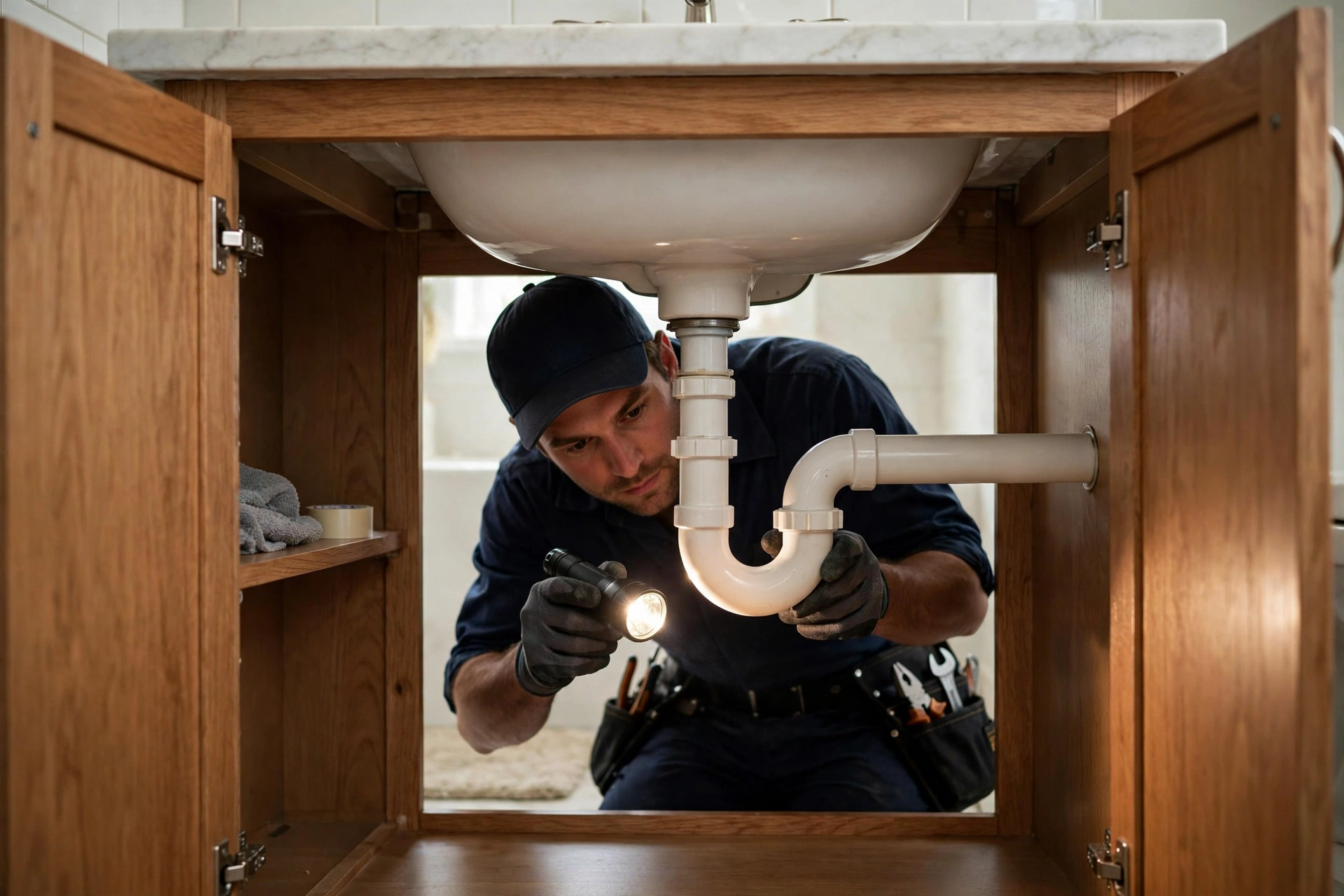
The number-one cause of sewer smell in homes is also the simplest. Every drain has a P-trap — that U-shaped bend under sinks, tubs, and showers — and its job is to hold a plug of water that blocks sewer gas from rising into the house. If a drain goes unused for a few weeks, that water evaporates, the seal breaks, and gas drifts up freely.
This is why the smell so often comes from the guest bathroom nobody uses or the basement floor drain — and California’s dry climate evaporates traps faster than you’d expect.
Run water in the drain for thirty seconds to refill the trap. For rarely used drains, add a tablespoon of mineral oil afterward — it floats on the water and slows evaporation dramatically.
Cause #2: A Failed Wax Ring Under the Toilet
The toilet seals to the floor flange with a wax ring. When that ring fails — the toilet rocks, the flange sits too low after a flooring change, or the wax simply aged out — sewer gas escapes around the base with every flush. You’ll often smell it strongest right at the toilet, and you may see water seeping at the base or a toilet that wobbles when you sit.
Don’t caulk around the base to trap the smell — that hides the leak while water rots the subfloor. The fix is pulling the toilet and setting a new ring; just know a rocking toilet often reveals a damaged flange underneath.
Cause #3: A Cracked or Blocked Vent Stack
Your drains need air. The vent stack — the pipe that runs up through your roof — lets air into the system so water flows smoothly and traps keep their seal. When a vent is blocked (bird nests and debris on the roof are classic) or cracked, two things happen: drains gurgle and run slow, and the pressure imbalance can siphon water right out of nearby traps, recreating the dry-trap problem from cause #1.
Suspect the vent when the smell comes with gurgling drains. Clearing a roof vent is quick work, but it means getting on the roof.
Cause #4: A Damaged Sewer Lateral
When the smell is persistent, house-wide, and none of the above fits, the problem may be underground. A cracked or separated sewer lateral lets gas escape into the soil around your foundation, where it finds its way inside. In California this is depressingly common: mature trees plus old clay or Orangeburg laterals equals root intrusion, and shifting soils separate aging joints.
Supporting clues include the smell plus slow drains throughout the house, gurgling, or soggy patches in the yard. This is exactly what a sewer camera inspection is for — a camera through the cleanout shows the break, the roots, or the belly in the line on video, so you’re fixing a known problem instead of guessing. Depending on what the camera finds, the repair might be a trenchless sewer repair that replaces the line without digging up your yard, or a traditional sewer line repair for collapsed sections.
Cause #5: A Missing or Loose Cleanout Cap
The sewer cleanout — usually a capped pipe stub in the front yard, garage, or side yard — gives access to the lateral. If the cap is missing, cracked, or cross-threaded, sewer gas vents straight out at ground level, right where you walk past it or where it drifts toward windows. It’s a five-minute check: find the cleanout, make sure the cap is present and snug. Replacement caps cost a few dollars.
When to Call a Plumber
Refill the traps and check the cleanout cap yourself. Call a plumber when the smell persists after that, when it’s paired with slow or gurgling drains, when the toilet rocks, or when you suspect vent or lateral damage. Sewer gas is mostly methane and hydrogen sulfide — the rotten-egg component — and while the levels in a home are rarely dangerous, they’re not something to live with. If the smell is strong, sudden, and house-wide, treat it as urgent and call an emergency plumber rather than airing the place out and hoping.
Frequently Asked Questions
Is sewer smell in the house dangerous?
At the levels from a dry trap or bad wax ring, it’s unpleasant but not dangerous — ventilate and fix the source. Very strong, persistent sewer gas can cause headaches and nausea, and extreme concentrations are hazardous. If the smell is overpowering or comes on suddenly throughout the house, leave and call a professional.
Why does my bathroom smell like sewer only sometimes?
Intermittent smell usually means a trap that’s borderline — it dries out between uses, or a venting issue that siphons the trap only under certain conditions (like when the washing machine drains). Note when it happens; the pattern points to the fixture.
Can a clogged drain cause sewer smell?
A clog alone doesn’t produce rotten-egg sewer gas — but decomposing gunk in a drain makes its own foul odor that’s easy to mistake for it. Clean the drain first; if the rotten-egg smell persists, work through the causes above.
How do I find my sewer cleanout?
Look for a 3- or 4-inch capped pipe stub: in the front yard near the house, in the garage or basement, along the side yard, or sometimes in a flower bed. Newer California homes often have it in the garage. If you can’t find one, a plumber can locate it — and if your home genuinely has none, adding one is worth doing before you ever need emergency access.


