Kitchen Sink Draining Slowly? Causes & Fixes
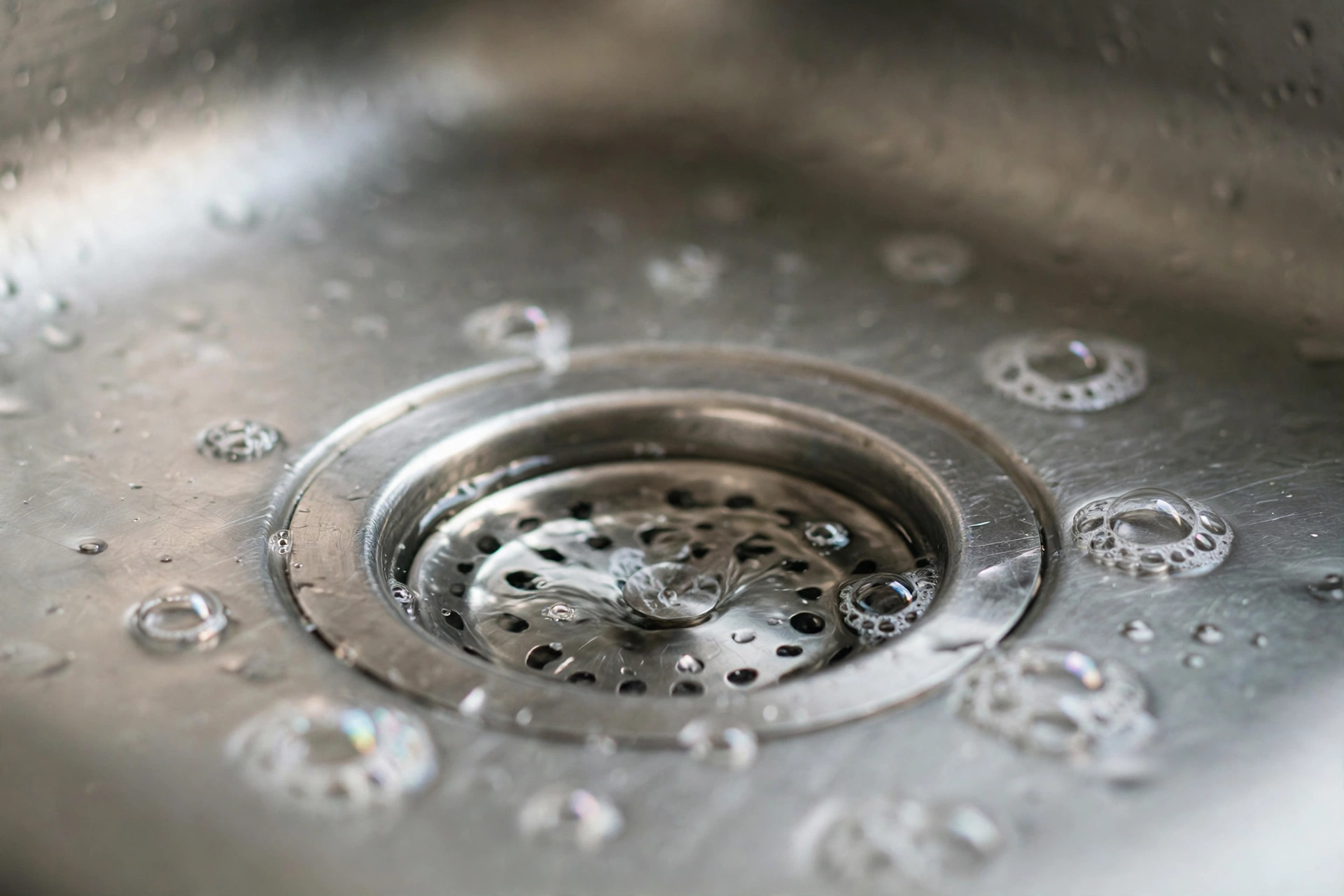
You rinse a plate, walk away, and come back to a sink still holding an inch of gray water. A kitchen sink that drains slowly is one of the most common calls we get, and it is almost never random. Something specific is narrowing that pipe. The good news: most kitchen drain problems have a clear fix once you know the cause.
Grease Buildup: The Number One Culprit
Pour bacon fat, cooking oil, or greasy pan drippings down the drain and they do not stay liquid. They cool, harden, and coat the inside of the pipe like cholesterol in an artery. Every later rinse adds another layer. Within a year or two, a two-inch kitchen line can be choked down to the diameter of a pencil.
The fix: Stop the bleeding first. Wipe greasy pans with a paper towel and toss it before washing. For existing buildup, run very hot water for a few minutes, then pour a kettle of near-boiling water straight down the drain. That melts soft, fresh grease. But if the buildup is old and layered, hot water will not touch it — the pipe needs to be mechanically cleaned. A professional drain cleaning with a proper auger or jetter scrapes the walls back to full diameter, which no chemical can do.
Food Particles Lodged in the Trap
The P-trap under your sink — that U-shaped bend — is designed to catch debris before it goes deeper. Rice, coffee grounds, eggshell fragments, and starchy pasta water are repeat offenders. Rice and pasta are the worst: they swell with water and turn into a paste that seals the trap.
The fix: Place a bucket under the trap, unscrew the slip nuts by hand or with channel locks, and dump out the trap. Nine times out of ten, you will find the clog sitting right there. Reinstall it, run hot water, and check for leaks at the joints. If the trap is clear but the sink still drains slowly, the blockage is further down the line.
Soap Scum and Hard Water Scale
A lot of California households deal with hard water, and it shows up in kitchen drains as a crusty mineral scale bonded with soap residue. That scale roughens the pipe interior, and rough pipe grabs grease and food faster. It is a compounding problem: scale catches grease, grease catches food, and the drain gets slower every month.
The fix: For light scale, a monthly flush with hot water and a cup of white vinegar helps keep things moving. For heavy scale that has been building for years, the line needs hydro jetting — high-pressure water that actually blasts mineral deposits off the pipe walls and restores the original diameter.
Garbage Disposal Backing Into the Sink
If your sink has a disposal and water backs up on the disposal side, the problem may not be a clog at all. A disposal with dull impellers or a partially jammed flywheel does not grind waste finely enough, so half-ground food packs into the drain line. You will often notice this after running the disposal — the sink gurgles, then drains even slower.
The fix: Run cold water for 15 seconds before and after using the disposal, and feed waste in gradually instead of dumping a full plate at once. If the disposal hums, jams, or smells, read our guide on garbage disposal repair — a struggling disposal will keep re-clogging the same drain until it is fixed or replaced.
A Blocked Vent Pipe
Every drain needs air behind the water to flow properly. That air comes through a vent pipe that runs up through your roof. If the vent is blocked by leaves, a bird nest, or debris, the drain cannot breathe — water drains slowly and you may hear gurgling from the sink or nearby fixtures.
The fix: This one is hard to DIY safely because it involves roof access. If plunging and cleaning the trap did nothing and multiple fixtures gurgle, the vent is a prime suspect and worth having a plumber check.
What About Chemical Drain Cleaners?
They occasionally clear a soft, shallow clog — but caustic cleaners generate heat that can warp PVC and corrode older metal pipes, and they are brutal on disposal seals. Worse, if the cleaner fails, you are left with a sink full of caustic water that makes any further work dangerous. A plunger and a trap cleaning solve more kitchen clogs, more safely, than any bottle.
When to Call a Plumber
Call a professional if the sink still drains slowly after you have cleaned the trap and plunged it, if more than one fixture is draining slowly at the same time, if you smell sewage from the drain, or if the problem keeps coming back every few weeks. Recurring slow drains usually mean buildup deep in the line or a developing sewer issue — both need professional equipment, not another bottle of cleaner.
Frequently Asked Questions
Why does my kitchen sink drain slowly but the bathroom is fine?
Because the blockage is in the kitchen branch line, not the main drain. Kitchen lines clog from grease and food — bathroom lines clog from hair and soap. Different pipes, different problems, which actually makes diagnosis easier.
Can boiling water damage my pipes?
A kettle of hot (not rolling-boil) water is fine for metal pipes and most PVC in good condition. Do not pour boiling water into a porcelain sink directly — thermal shock can crack it — and never use it if you have already poured chemical cleaner down the drain.
How often should kitchen drains be professionally cleaned?
For a household that cooks daily, once every one to two years keeps grease and scale from building to problem levels. Homes with heavy frying or a disposal that sees daily use lean toward yearly.
Is a slow kitchen drain an emergency?
Not usually — but it becomes one if water stops draining entirely or if sewage backs up into the sink.