Garbage Disposal Jammed or Humming? Fix It Safely
You flip the switch and instead of the usual roar you get a low hum — or worse, nothing at all, just a faint buzz from under the sink. A jammed garbage disposal is startling, but it is rarely dead. In most cases, something is wedged in the grinding chamber or the motor’s overload protector has tripped. Here is how to sort it out safely, and how to tell when the unit is done for.
First: The Safety Rules (Non-Negotiable)
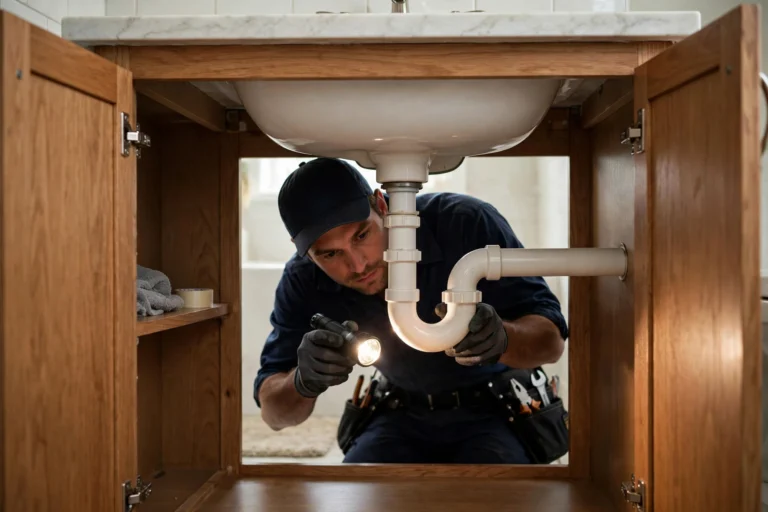
Before you touch anything: turn the disposal switch OFF, and unplug it or flip its breaker. Never put your hand into the disposal chamber, even when it is off — the impellers are not razor sharp, but a jammed unit can release suddenly. Use tongs, pliers, or a wooden spoon handle for everything below. These rules sound obvious until you are annoyed and in a hurry, which is exactly when injuries happen.
The Humming Disposal: Something Is Jammed
A hum with no grinding means the motor is getting power but the flywheel cannot turn. The usual suspects: a bone fragment, a fork tine, a bottle cap, a piece of glass, or fibrous food like celery and artichoke leaves wrapped around the works.
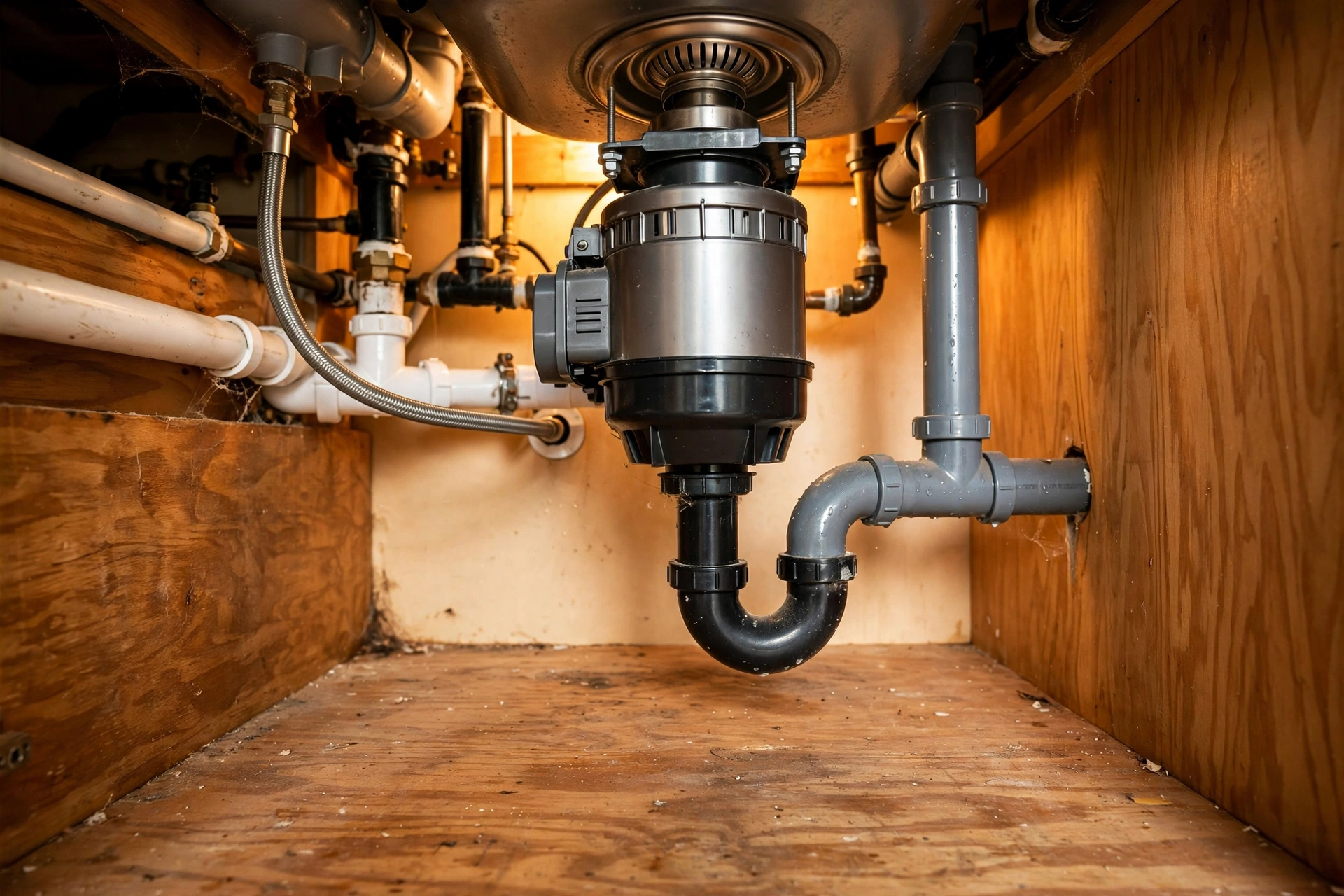
The fix: With power OFF, shine a flashlight into the chamber and pull out whatever you can see with tongs. Then find the hex-shaped hole in the very center of the unit’s underside. Insert the Allen wrench that came with the disposal (a standard 1/4-inch hex key works) and work it back and forth. You will feel the jam break free. Remove the loosened debris with tongs, restore power, and press the red reset button on the bottom of the unit. Run cold water and test.
Dead Silent: The Overload Protector Tripped
No hum at all usually means the built-in overload protector cut power to save the motor — it trips when the unit overheats from a jam or from running too long.
The fix: Clear any visible jam as described above, then press the red reset button on the bottom (or side) of the unit. If it does not click and stay in, wait 10 minutes for the motor to cool and try again. If it trips again immediately with no jam present, the motor itself is failing. Our garbage disposal service page covers repair versus replacement, but a unit that trips its reset on an empty chamber is usually telling you it is finished.
Grinding But Weak: Dull Impellers and Worn Plates
A disposal that runs but leaves chunky waste behind is not jammed — it is worn out. The impellers (those blunt lugs on the spinning plate) round off over years of use, and food starts passing through half-ground. That half-ground waste is exactly what packs into your drain line and causes the slow kitchen sink backups people blame on the pipes.
The fix: Try grinding a tray of ice cubes — it knocks loose caked-on debris and gives a mild scouring. If performance does not improve, the grinding components are worn. Disposals typically last 8 to 12 years; past that, replacement beats repair on cost almost every time.
Water Leaking From the Disposal
Water dripping from the top means the sink flange seal has failed. Leaking from the side usually points to a loose dishwasher or drain pipe connection. Leaking from the bottom is the bad one — it means the internal seals are gone and the housing itself is compromised.
The fix: Top and side leaks are often fixable by tightening the mounting ring or replacing a ten-dollar flange gasket. A bottom leak cannot be repaired — the unit needs replacing, and running it in the meantime risks water damage inside the cabinet.
Things That Jam Disposals (Stop Putting These Down There)
- Bones, pits, and shells — harder than the impellers are designed for.
- Fibrous foods — celery, asparagus, artichoke leaves, corn husks wrap around the flywheel.
- Starchy foods — potato peels, rice, pasta, and oatmeal form a glue-like paste.
- Coffee grounds — they do not grind, they pack. They settle in the trap like sediment.
- Grease and oil — coat the chamber and the drain line downstream.
When to Call a Plumber
Call if the reset keeps tripping, if the unit leaks from the bottom, if it is over 10 years old and struggling, or if the jam cleared but your kitchen drain is still slow — that means waste packed into the line past the disposal and needs professional clearing. And if water is actively leaking under the sink and you cannot stop it, treat it as urgent: cabinet water damage gets expensive fast, and our emergency plumbers handle exactly that kind of call.
Frequently Asked Questions
Is it safe to put my hand in the disposal if it is off?
No. Even with the switch off, a jammed flywheel can snap free when disturbed, and the impellers can cut. Always use tongs or pliers. There is no clog worth a hand injury.
Why does my disposal hum but not spin?
The motor is powered but the flywheel is physically blocked — usually by a hard object or wrapped fibrous food. Free it with the hex wrench underneath, clear the debris, and hit the reset button.
How long should a garbage disposal last?
Eight to twelve years for a typical household unit. Heavy use, frequent jams, and grinding things it should not grind all shorten that. If yours is past ten and acting up, price a replacement before paying for a repair.
Can I use chemical drain cleaner in a disposal?
Do not. Caustic cleaners attack the rubber seals and gaskets inside the unit and can splash back when the disposal runs. Mechanical clearing is the safe route.