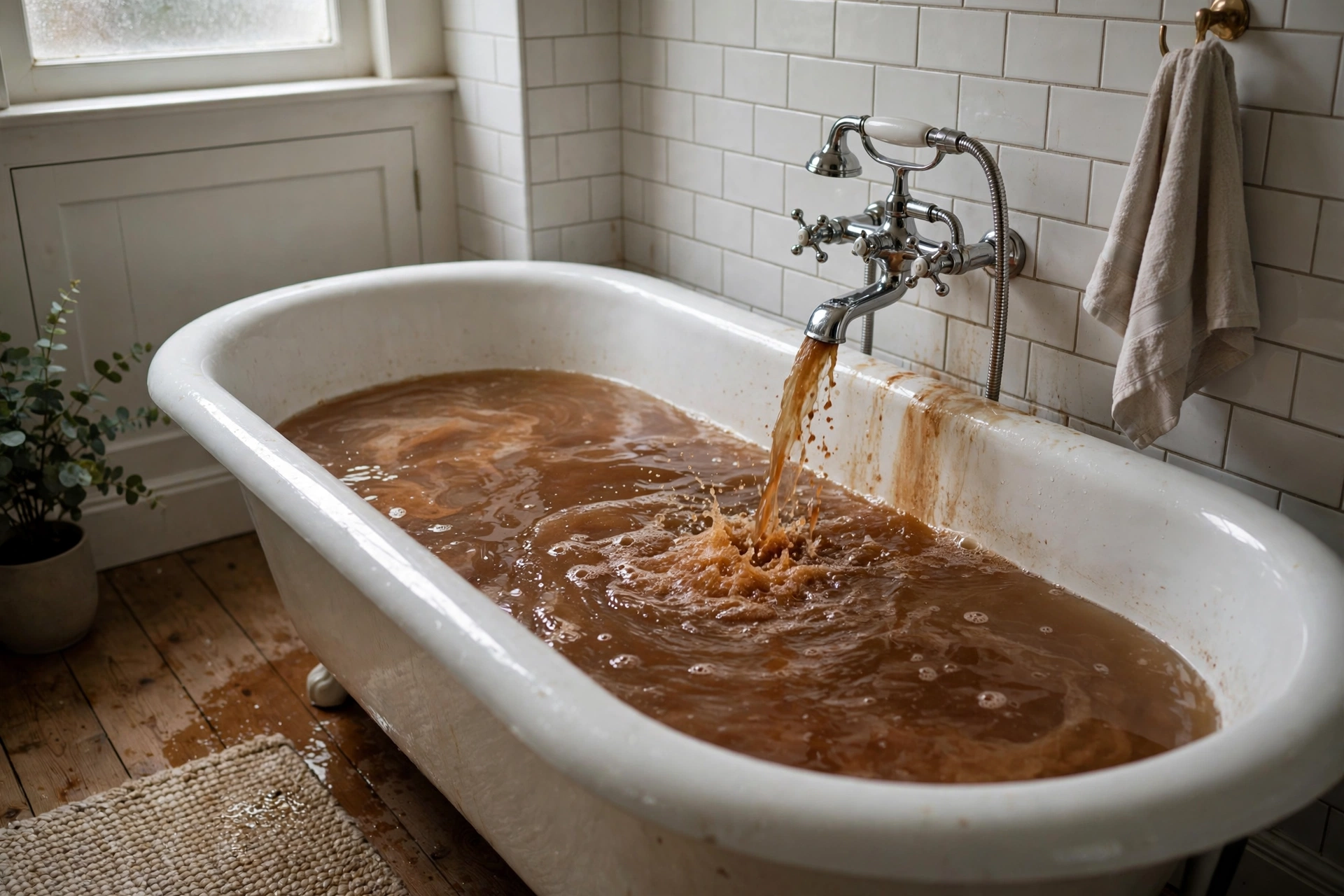
Rusty or Brown Hot Water? What It Means
You turn on the hot tap and the water comes out brown, rusty, or faintly orange. It’s unsettling — nobody wants to bathe in what looks like weak tea. The good news is that discolored hot water is a diagnostic gift: whether it’s only the hot side or both hot and cold tells you exactly where the problem lives. Here’s how to read what your water is telling you.
The Key Test: Hot Only, or Hot and Cold?
Run the cold tap for 30 seconds, then the hot. If only the hot water is discolored, the problem is inside your water heater — almost certainly corrosion. If both hot and cold run brown, the issue is in your pipes or the municipal supply, not the heater. Do this test first, because it determines everything that follows.
Hot Water Only: Your Tank Is Corroding
Inside every tank water heater is a steel tank, and steel plus water plus time equals rust. The tank’s defense is the anode rod — a magnesium or aluminum rod that corrodes in place of the tank walls. When the rod is consumed and nobody replaces it, the tank itself starts rusting, and that rust colors your hot water.
This is end-of-life territory for the tank. You can’t un-rust a water heater. Replacing the anode rod at this stage sometimes buys a little time, but once rust is in the hot water supply, the tank wall is already compromised. Start planning for water heater replacement — on your schedule, not as a 2 AM emergency when the tank finally lets go.
Hot and Cold Both: It’s the Pipes (or the City)
If the cold water is brown too, look upstream. In older California homes with galvanized steel pipes, interior corrosion sheds rust into the water — hot water just shows it more because heat accelerates the reaction. Another possibility: the city flushed hydrants or did main work, stirring up sediment. That kind of discoloration usually clears within a few hours.
Galvanized pipe corrosion only gets worse. If your home still has galvanized supply lines and the water is regularly discolored, a repipe is the real fix — patching individual sections just moves the problem down the line. A plumber can assess how far the corrosion has gone.
California’s Hard Water Speeds All of This Up
Hard water doesn’t just cause sediment — the mineral content makes water more aggressive toward anode rods, consuming them faster. In much of California, anode rods that might last five years elsewhere can be gone in three. That’s why heaters here rust out younger. If your heater is past eight years and you’ve never had the anode rod checked, assume it’s gone.
Is Rusty Water Dangerous?
Rust itself (iron oxide) isn’t a health hazard at the levels in tap water — it’s an aesthetic and plumbing problem, not a poisoning risk. But don’t get complacent: a corroding tank or pipes can also harbor bacteria, and discoloration can mask other water quality issues. If the water smells metallic or like rotten eggs along with the color, get it checked rather than just living with it.
What To Do Right Now
Do the hot-vs-cold test. If it’s hot-only, avoid draining the tank aggressively — a heavily corroded tank can start leaking once disturbed. Check the heater’s age on its label. If it’s over ten years old with rusty hot water, call for replacement quotes now while you can still take a warm shower. If both taps are brown after city work, run the cold taps for a few minutes to clear the lines.
When to Call a Plumber
Call promptly for hot-only rust on a heater over eight years old — you’re on a countdown to tank failure. Call if the discoloration persists more than a day after any city water work, if water pressure drops alongside the color change (corrosion closing pipes), or if you see actual flakes or grit in the water. And if you’re unsure whether it’s the heater or the pipes, a quick professional diagnosis beats guessing — the fixes are completely different.
Frequently Asked Questions
Will a water filter fix rusty hot water?
It’ll improve what comes out of the tap, but it won’t stop the tank from corroding. A filter treats the symptom; the tank still needs replacement. Fix the source first, then consider filtration for taste.
How long does a water heater last once the water turns rusty?
There’s no reliable timeline — weeks to months, occasionally longer. The rust means the protective systems have failed. Plan the replacement now instead of waiting for the leak.
Does a tankless water heater avoid rust problems?
Largely, yes — no tank means no tank to rust. Tankless units still need descaling in hard-water areas, but rust-colored water from a failed tank is off the table entirely. It’s one reason many California homeowners make the switch with a tankless installation when their tank unit dies.
My water is only slightly yellow — is that rust?
Could be early-stage corrosion, or just sediment stirred up. Run the hot tap for a full minute — if it clears, it was settled sediment. If it stays yellow, the corrosion is ongoing and the heater needs attention.