Pinhole Leaks in Copper Pipes: California’s Hidden Issue
Copper pipe is supposed to last 50 years — so why are California homeowners finding tiny misting leaks in copper barely 15 or 20 years old? Because in much of the state, the water itself is slowly eating the pipe from the inside out. And a single pinhole is almost never the whole story.
What a pinhole leak looks like
From the outside, you’ll see a small green or blue-green crusty spot on the copper — that’s oxidized copper, the scar tissue of corrosion. Wipe it and you might find a hole literally the size of a pinhead, misting or weeping water. They show up on horizontal runs, near fittings, and in hot water lines first. If you find one, assume there are more forming that you can’t see yet.
Why California water attacks copper
1. Chloramines in municipal water
Many California water agencies disinfect with chloramines (chlorine plus ammonia) instead of plain chlorine. Chloramines are effective disinfectants, but they’re also more aggressive toward copper over long exposure. The chemistry is slow — years, not months — but it’s relentless, and it’s one of the most documented drivers of premature copper pitting in the state.
2. High water pressure and velocity
Water moving too fast through copper erodes the protective oxide layer inside the pipe, exposing fresh metal to corrosion. Pressure above 80 psi is common in hillside California neighborhoods (gravity does the boosting), and it accelerates every corrosion mechanism at once. If your pressure is high, pinholes are a matter of when, not if.
3. Flux residue from installation
When copper is soldered, flux cleans the joint — but flux left inside the pipe is corrosive. Sloppy soldering jobs from decades ago leave globs of flux that eat pits into the pipe wall right next to fittings. If your pinholes cluster near joints, this is a likely contributor.
4. Aggressive or soft water chemistry
Very soft, low-pH (acidic) water dissolves copper’s protective layer instead of building it. Some California supplies — particularly in certain foothill and coastal areas — run naturally soft and slightly acidic, which is copper’s worst-case water.
5. Dissimilar metals and stray current
Where copper meets galvanized steel without a proper dielectric union, galvanic corrosion eats the joint. Stray electrical current from improper grounding can do the same along a whole run. These are less common but worth checking when pinholes appear in odd patterns.
Patch or repipe? The honest answer
Here’s what most homeowners need to hear: a pinhole leak is a symptom of systemic pipe condition, not an isolated event. You can absolutely patch one — a repair clamp or a soldered patch over the spot will hold. Epoxy putty works as a stopgap. But patching doesn’t change the water chemistry or the condition of the other 200 feet of pipe. Once pinholes start, more usually follow — sometimes within months.
That’s why the lasting fix for chronic pinhole leaks is usually a repipe, most often with PEX. PEX doesn’t corrode, shrugs off chloramines and pH swings, and installs faster with fewer wall openings than re-running copper. Get a professional assessment first; a single pinhole in 40-year-old pipe is a different conversation than five in 15-year-old pipe.
What you can do right now
- Check your water pressure with a cheap gauge on a hose bib. Over 80 psi? A pressure regulator protects every pipe and fixture in the house.
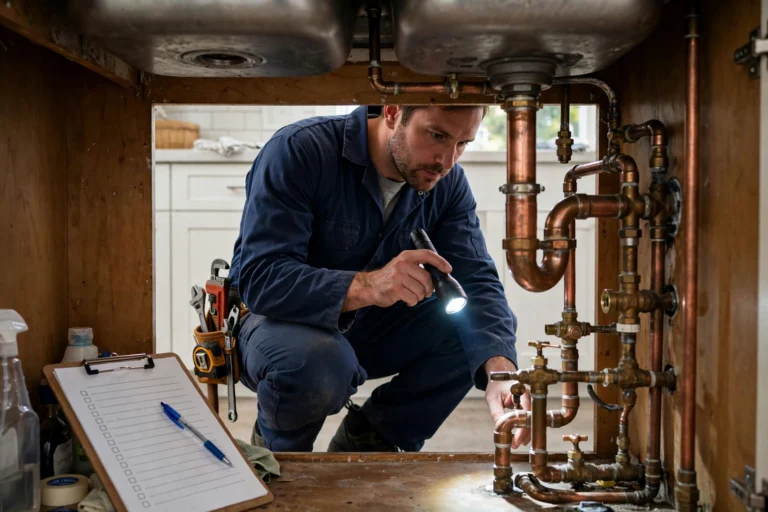
- Look for the green spots. Check exposed copper in the garage, water heater area, and under sinks. Green crust means active or past pitting.
- Don’t ignore a musty smell or a rising water bill — pinholes inside walls and slabs leak silently for months. Leak detection finds them without demolition guesswork.
- If a pinhole bursts and sprays: shut off the main and call for emergency help — pressurized sprays soak drywall fast.
Slab leaks: pinholes’ worst hiding place
In California’s slab-foundation homes, copper water lines often run under the concrete. A pinhole there doesn’t stain a wall — it saturates the ground beneath your home, and you notice it as a hot spot on the floor, a skyrocketing water bill, or the sound of running water when nothing’s on. Under-slab pinholes are the classic slab leak, and they need specialized detection and repair — not a patch clamp.
When to Call a Plumber
- You’ve found one pinhole — have the system’s overall condition assessed, not just the spot
- Pinholes keep appearing (two or more is a pattern, not bad luck)
- Signs of hidden leaks: water bill spikes, warm floor spots, musty odors, the sound of running water
- Your home still has its original copper and you’re seeing green corrosion at multiple points
Pinhole Leak FAQ
Can you just solder over a pinhole leak?
Temporarily, yes — cleaning and soldering over the pit can seal it. But solder doesn’t restore the thinned pipe wall around the hole, and it does nothing about the chemistry causing the problem. Think of it as a bandage, not a cure.
How long does a pinhole patch last?
A proper repair clamp can hold for years. The issue isn’t the patch failing — it’s the next pinhole forming six inches away. That’s why recurring pinholes point toward repiping rather than chasing spots.
Is PEX really better than copper for California water?
For corrosion resistance, yes — PEX is immune to the pitting chemistry that attacks copper, and it tolerates chloramines and aggressive water far better. Copper remains an excellent pipe in the right water; the question is whether your water is the right water. A water test and pipe inspection answer that.
Will my insurance cover pinhole leak damage?
Sudden water damage from a burst pinhole is often covered; the pipe repair itself and long-term seepage usually aren’t. Document damage promptly and check your policy — and fix the source quickly, because insurers don’t pay for damage that kept growing while you waited.